
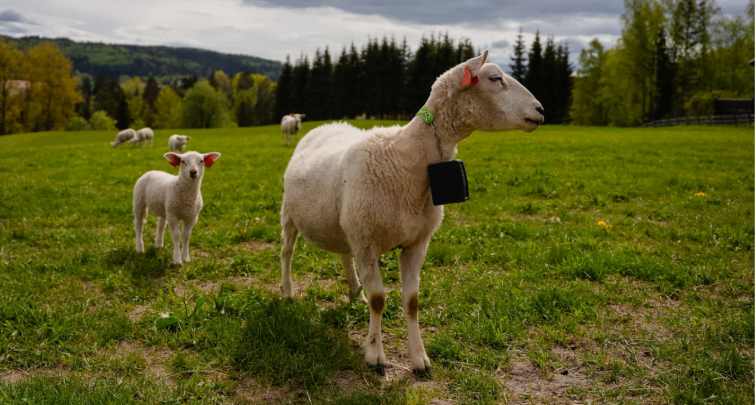
Virtual fencing technology (VFT) could change the way sheep are managed across the Wheatbelt, and Wheatbelt NRM has been taking a closer look at its potential.
Currently, VFT is only approved for use in cattle systems in WA. Until recently, Gallagher’s eShepherd was the only commercial system approved for use in the state and was specifically named in the animal welfare regulations governing virtual fencing. Halter has now also been approved.
This technology is particularly exciting for Wheatbelt NRM because our projects look at livestock management from both sides of the fence. Our Green Sheep and Forage for Nature Projects explore how well-managed livestock, pastures and strategic grazing can contribute to natural capital outcomes. At the same time, our threatened species and ecological community projects often require livestock to be excluded from sensitive areas. VFT could offer producers greater flexibility to achieve both, directing grazing where it is beneficial while protecting natural assets where livestock needs to be excluded.
VFT uses GPS collars that emit sound and electrical stimuli to contain animals within virtual paddocks without the need for physical fences. Trials elsewhere have shown that sheep can learn to respond to these virtual boundaries. However, wool remains a major challenge to adoption, particularly in wool production breeds such as Merinos. A growing fleece can interfere with contact between the collar and skin, affect collar fit, and create potential welfare issues such as tightening, rubbing, trapped moisture and skin lesions. Collars may also affect neck wool and create additional handling at shearing time. Another limitation is scale: most sheep trials to date have involved relatively small flocks, leaving questions about how effectively the technology would work with the hundreds of sheep typical of Wheatbelt enterprises.
Despite these challenges, there are farming situations in the Wheatbelt where VFT could be highly beneficial, particularly for smaller shedding flocks. Potential applications include:
excluding sheep from waterways, revegetation and erosion-prone soils and saline seepages;
creating temporary grazing cells within large stubbles;
controlling access to dual-purpose crops;
concentrating grazing on problem weed patches;
protecting areas with low groundcover without constructing permanent internal fencing; and
adjusting grazing boundaries as crop, soil and seasonal conditions change.
Get involved
The South Australian Research and Development Institute (SARDI) and its industry partners have been researching VFT for some time and are now working with producers to turn that research into practical, on-farm tools.
This work includes demonstration sites, best-practice guides, return-on-investment tools, workshops, field days, case studies and producer interviews, as well as further investigation into the feasibility of VFT for sheep and goats.
To find out more, or if you’re a producer interested in getting involved, please contact Bianca Agenbag, a Senior Research Officer from SARDI.
Subscribe to our e-newsletter and keep up to date on current events, partnership opportunities, and NRM in the Wheatbelt.
Published eNews #420, November 2026