
Green Sheep Project
Building a climate-smart, resilient and evidence-based future for sheep grazing in the WA Wheatbelt.
Wheatbelt NRM is delivering the Western Australian component of the Green Sheep Project, part of an almost $3 million national initiative designed to strengthen Australia’s sheep industry in the face of a changing climate and growing demand for verified sustainability credentials.
Led by Sheep Producers Australia, the Green Sheep Project supports sheep producers with practical tools and knowledge to respond to climate pressures, improve grazing and pasture management, document natural capital, and make more informed decisions for the future.
In the Wheatbelt region of Western Australia, the project focuses on understanding, demonstrating and measuring the environmental role of sheep grazing within broadacre and mixed farming systems. This work will help producers gain a clearer understanding of the environmental impact and value of sheep, while building confidence in sustainability reporting, natural capital tools and the use of supply-chain-aligned data.
Overall, the project is designed to equip producers with clearer pathways to strengthen resilience, respond to market expectations and support climate-smart decision making.
Project delivery and support
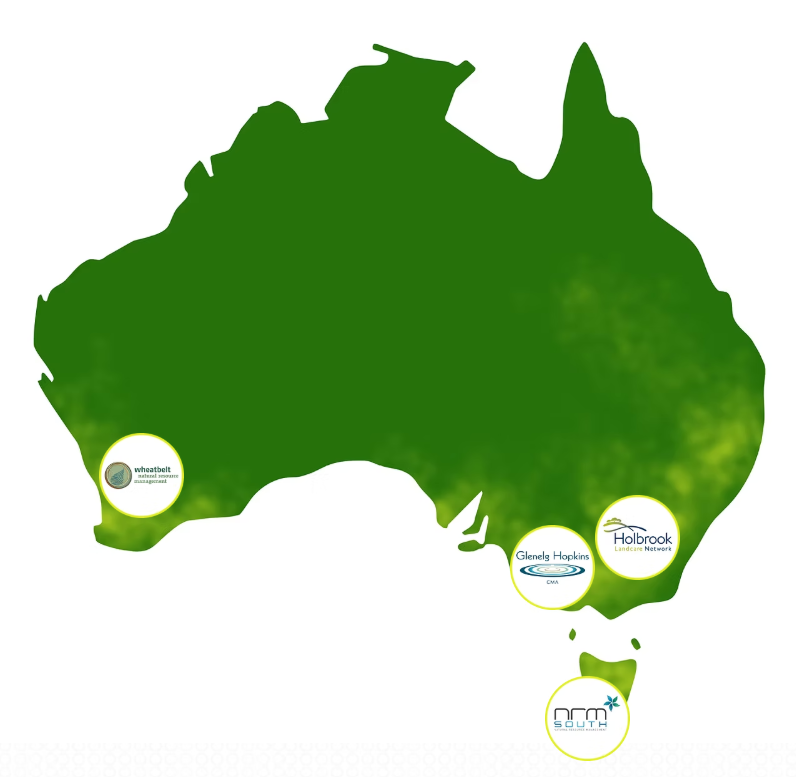
The Green Sheep Project is led nationally by Sheep Producers Australia and delivered by four Natural Resource Management organisation across Australia, including Wheatbelt NRM (Western Australia), Glenelg Hopkins CMA (Victoria), Holbrook Landcare Network (New South Wales), and NRM South (Tasmania).
The project is supported by Meat & Livestock Australia, Australian Wool Innovation, Integrity Systems Company, AUS-MEAT, the Australian Meat Industry Council, the Southern Australian Livestock Research Council, and the WA Livestock Research Council, bringing together on-farm action with whole-of-supply-chain expertise.
The Green Sheep Project is supported by the Australian Government through the Climate-Smart Agriculture Program under the Natural Heritage Trust.
Intended outcome of project
Through this project, Wheatbelt producers will gain:
Clear, evidence-based insights into the impact of sheep grazing on environmental health and natural capital in broadacre and mixed farming systems
Supply-chain-ready farm data that documents environmental outcomes for processors
Sustainable and adaptable grazing practices to support long-term climate resilience
Contact Project Manager Aram Ali for more information.
