
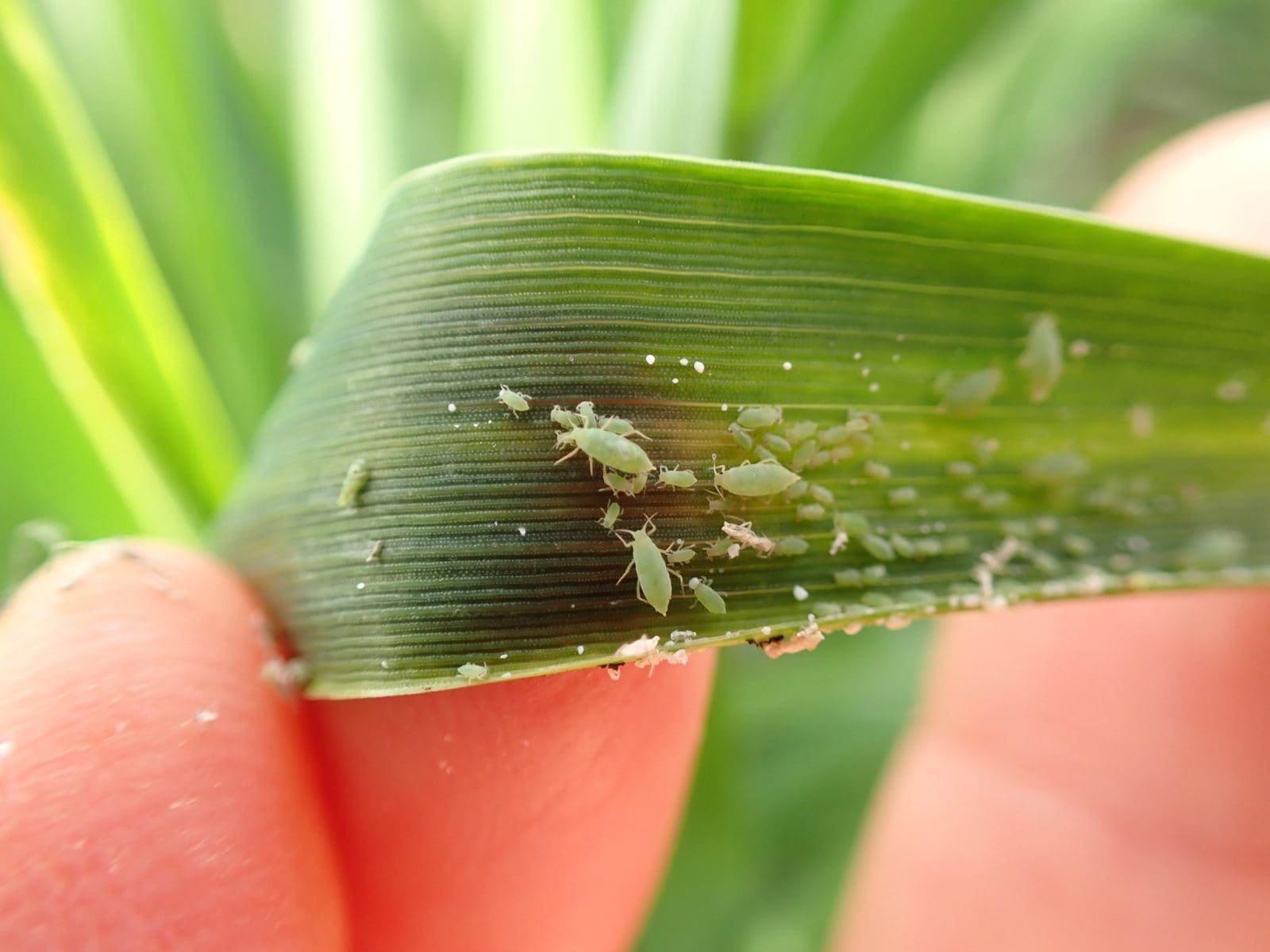
Photo Credit: Grains Research and Development Corporation (GRDC)
Russian Wheat Aphids are an emerging pest within wheat and barley crops in the Western Australian Wheatbelt.
First described in Russia during the 1900’s, Russian Wheat Aphids (Diuraphis noxia) (RWA) were first recorded in a South Australian wheat crop in 2016. RWA subsequently migrated to the Western Australian Wheatbelt with recent cases reported in a wheat crop in Meckering in 2025. RWA have so far only been recorded in wheat and barley crops in WA.
These pests can withstand a wide range of temperatures but are commonly found in the warmer drier climates of the WA Wheatbelt as far south as Esperance. It is important to regularly check crops particularly during autumn (post emergence), to identify and control this pest.
Lifecycle and reproductive preference:
RWA reproduce mainly through asexual reproduction, enabling them to multiply quickly and build up large populations. RWA first emerge during autumn, when wheat and barley crops begin to germinate, infesting seedlings.
They are typically wingless when they first emerge, developing wings later as they mature. The populations peak during the winter months when rainfall is the greatest and continue to reproduce throughout the growing stage of the crop.
As the climate begins to warm and growing conditions become drier, RWA tend to migrate to other plants or parts of the paddock, avoiding the mature ripening crops. During summer they become “refugees” on other plants such as grasses and wait for a new cropping cycle to begin to start their breeding cycle again.
Impact on Wheatbelt crops and infection Behaviours:
RWA target cereal crops such as wheat (most commonly) and barley in the Western Australian Wheatbelt. They target new leaves and typically the underside of the leaves by injecting toxins via its saliva whilst feeding on the plant. The toxins are fast acting and phytotoxic to the plant affecting germination processes and stunting growth.
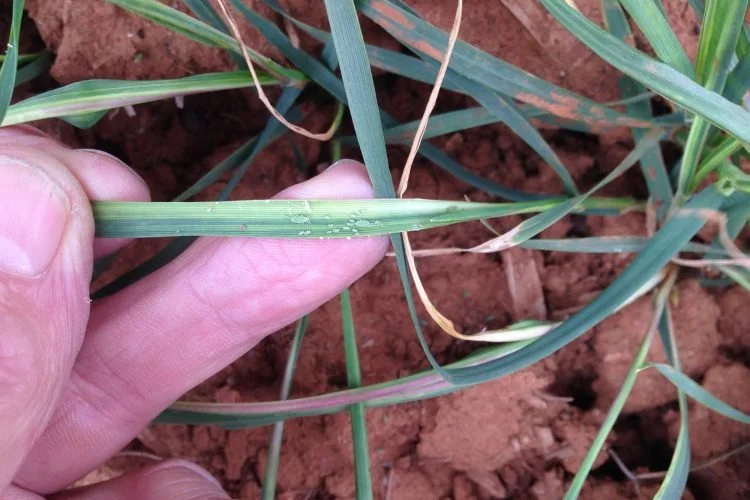
Purple stain on leaf, with Russian Wheat Aphids on it. Source: Cesar Australia, Russian Wheat Aphid PestNotes.
Appearance:
Like many other common wheat aphids, RWA are a light green colour and are easily visible under hand lens or an iPhone macro-Lense, with a length of around 1.4-2.3mm. They have a distinctive elongated body shape, black eyes, short antennae and lack of visible cornicles (exhaust pipes).
DPIRD provide this list of damage and crop symptoms to look out for:
Damage located at the base and sheath of newly emerging leaves
Leaf rolling along it’s margins
Crops appear purple
White, yellow or purple longitudinal streaks on leaves
Hooked shaped head growth from awns trapped in curling flag leaf
Curling of the flag leaf can cause emerging heads and awns to become trapped
Heads with a bleached appearance
Noticeable loss of green colouration across the crop
Loss of vigour
Stunted plant growth often appearing flat
Damaged areas may appear in hotspots or along field edges
Plant symptoms can be confused for herbicide damage, nutrient deficiencies, or virus symptoms
From a distance, damage may appear as a general loss of colouration across the affected crop area.
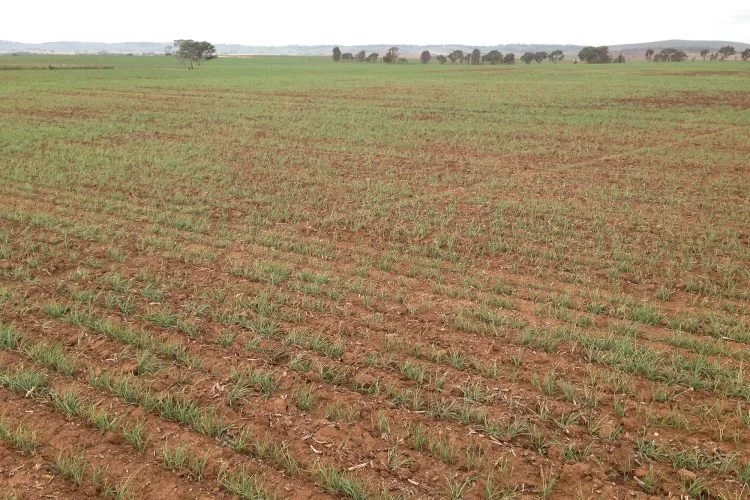
Stunted growth caused by a large infestation. Source: Cesar Australia, Russian Wheat Aphid PestNotes.
Monitoring and management:
Following crop emergence, monitor wheat and barley for RWA and signs of damage. Report suspected infestations to DPIRD for confirmation and management advice. As symptoms may take up to seven days to appear, regularly inspect affected crops and report infestations through the PestFacts WA Reporter app.
The most common form of treatment for RWA are chemicals sprayed directly onto the affected crop. A seed treatment in the form of insecticide may also be applied during or prior to the sowing to prevent infestations. Prior to head emergence on wheat and barley crops, insecticide application is recommended to kill aphids hiding under curled leaves.
Despite having treated the aphids the crops health will still be compromised by the aphids with the flow on effect of reduced yield depending on the percentage of tillers that have been damaged. GRDC trials recorded a 0.28% yield loss per percent of tillers with RWA.
Useful links:
References:
Department of Primary Industries and Rural development (DPIRD). (2024). Russian wheat aphid and it’s management in wheat and barley.
Grains Research and Development Corporation (GRDC) .(n.d). Russian Wheat Aphid
GRDC Groundcover. (13 September 2023). Northern NSW growers urged to check winter crops for Russian wheat aphids
Cesar Australia. (July 2016). Russian wheat aphid.
Published eNews #417, August 2026