
How Are Landholders Regenerating the Gabby Quoi Quoi Catchment?
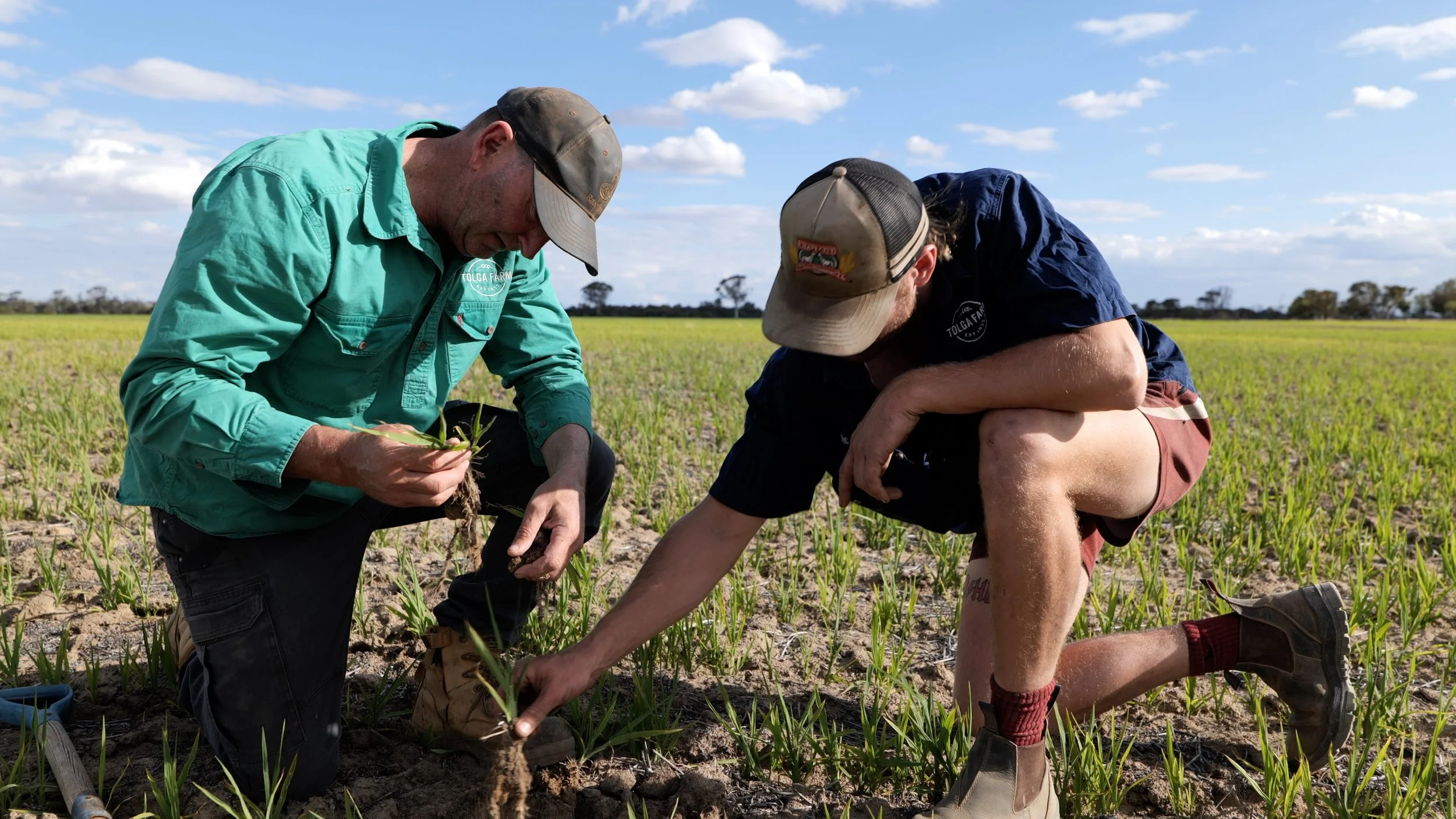
The Collaborative Catchment Approach to Wheatbelt Regenerative Agriculture project began in 2023 as a partnership between Wheatbelt NRM and the Gabby Quoi Quoi (GQQ) Catchment Group, a local community group that has been caring for the catchment since 1989. Now in its final stages, the project is wrapping up on-ground activities and reflecting on what has been achieved across the catchment.
Bringing together local landholders, technical expertise and community knowledge, the project explored practical ways of improving landscape health and building farm resilience across the catchment.
A key component of the project focused on landscape rehydration principles. Through workshops and field activities, landholders explored approaches aimed at encouraging natural processes to recycle water, energy and nutrients more effectively across the landscape.
Rather than allowing rainfall to quickly move through creek lines and valley floors, landscape rehydration works to slow and redistribute water to drier parts of the landscape, helping make better use of rainfall where it falls.
As part of the project, participating landholders worked one-on-one with a consultant from the Mulloon Institute. Together, they walked their properties and discussed site-specific challenges and opportunities. They also developed customised landscape rehydration plants tailored to the individual farming enterprises.
In total, eight property plans were completed, with five landholders receiving funding to begin implementing their plans.
Project activities included:
Planting native vegetation to better utilise water across the landscape and help reduce salinity.
Fencing sensitive areas to allow for natural recovery.
Constructing and realigning contour banks to improve water movement and prepare sites for future revegetation.
Installing a solar-powered freshwater reclamation systems for uses including spray mixing and household irrigation.
While each property required a different approach, all projects shared a common goal of slowing down the flow of water, improving landscape function, and farm resilience.
Several landholders installed fencing along waterways to establish new revegetation areas. Some landholders focused on protecting remnant trees and nature corridors from livestock. Others aimed to reduce erosion and redirect runoff to more useful parts of the landscape.
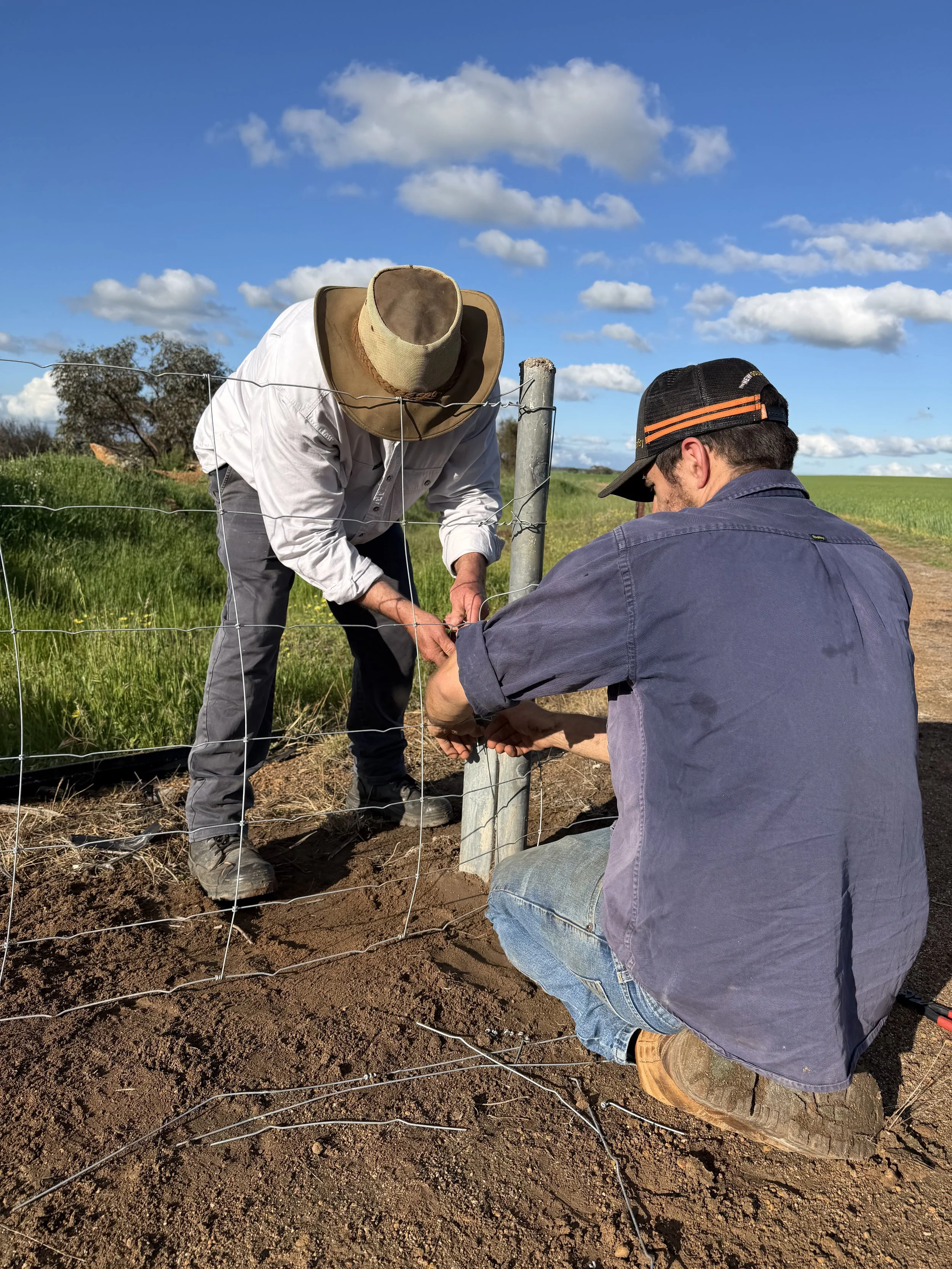
Fencing on Dew property in Konnongorring in preparation for future revegetation.
The project also supported innovative approaches to address land degradation. At one property, a solar-powered freshwater reclamation system has been operating since October 2025, providing fresh water for garden irrigation, orchards, spray operations, and firefighting purposes. The system is also contributing to efforts to rehabilitate degraded land by helping lower the water table and support landscape recovery.
In Konnongorring and Kalguddering, landholders continue to revegetate salt-affected areas using a range of salt-tolerant species. Landholders described seeing positive changes over time, with vegetation establishing, as well as soil condition improving and habitat returning to formerly degraded sites.
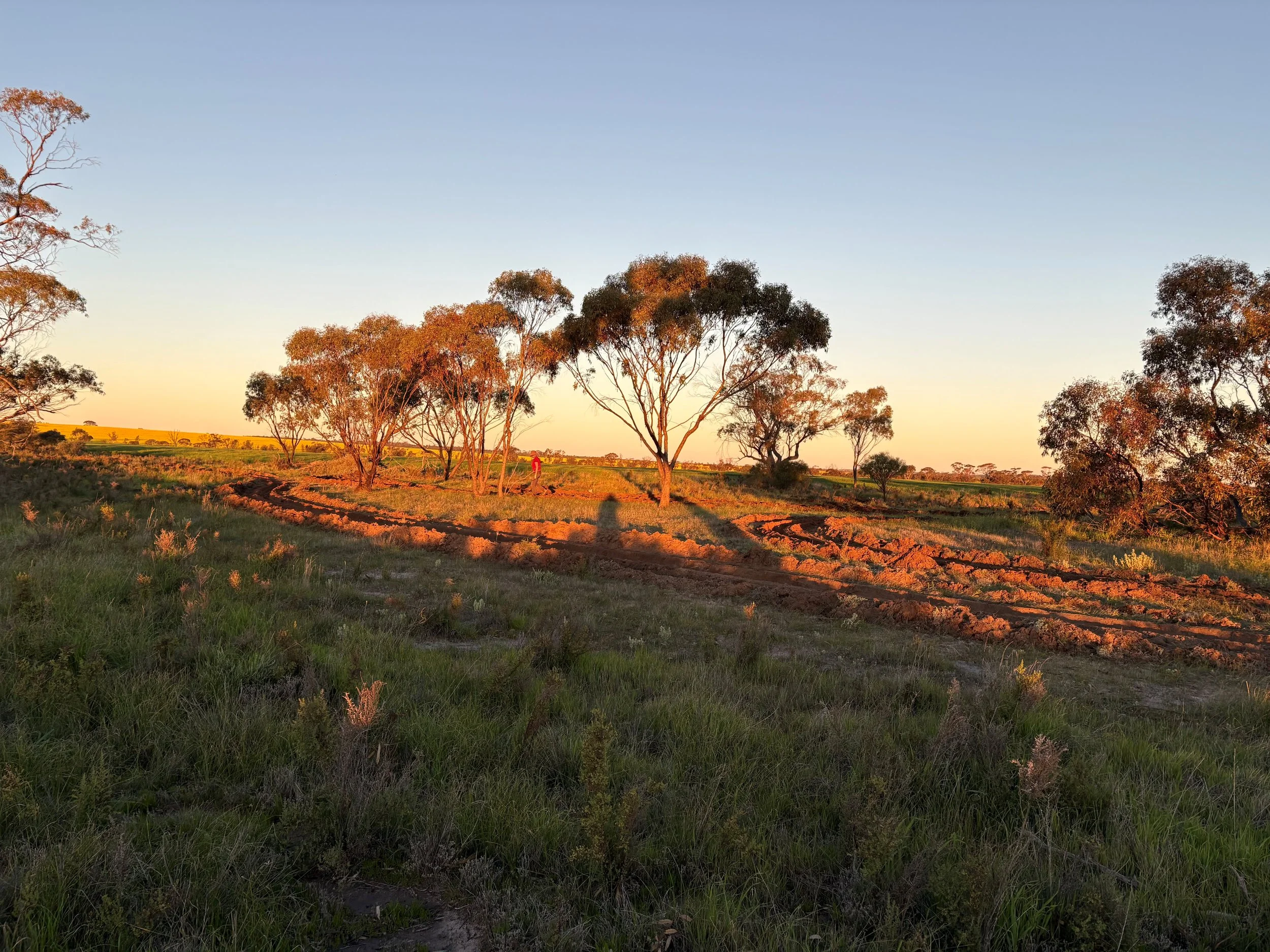
Revegetation on Browne’s farm in Kalguddering to capture water higher in the landscape.
While valuable early results are already emerging, the work is continuing.
Over the coming years, Wheatbelt NRM and the Gabby Quoi Quoi Catchment Group will monitor project sites to better understand how landscapes respond to rehydration and restoration activities.
By sharing lessons from the GQQ project, Wheatbelt NRM and the Gabby Quoi Quoi Catchment Group aim to support other landholders to make informed decisions about practical actions that can improve the resilience and productivity of their farms, now and into the future.
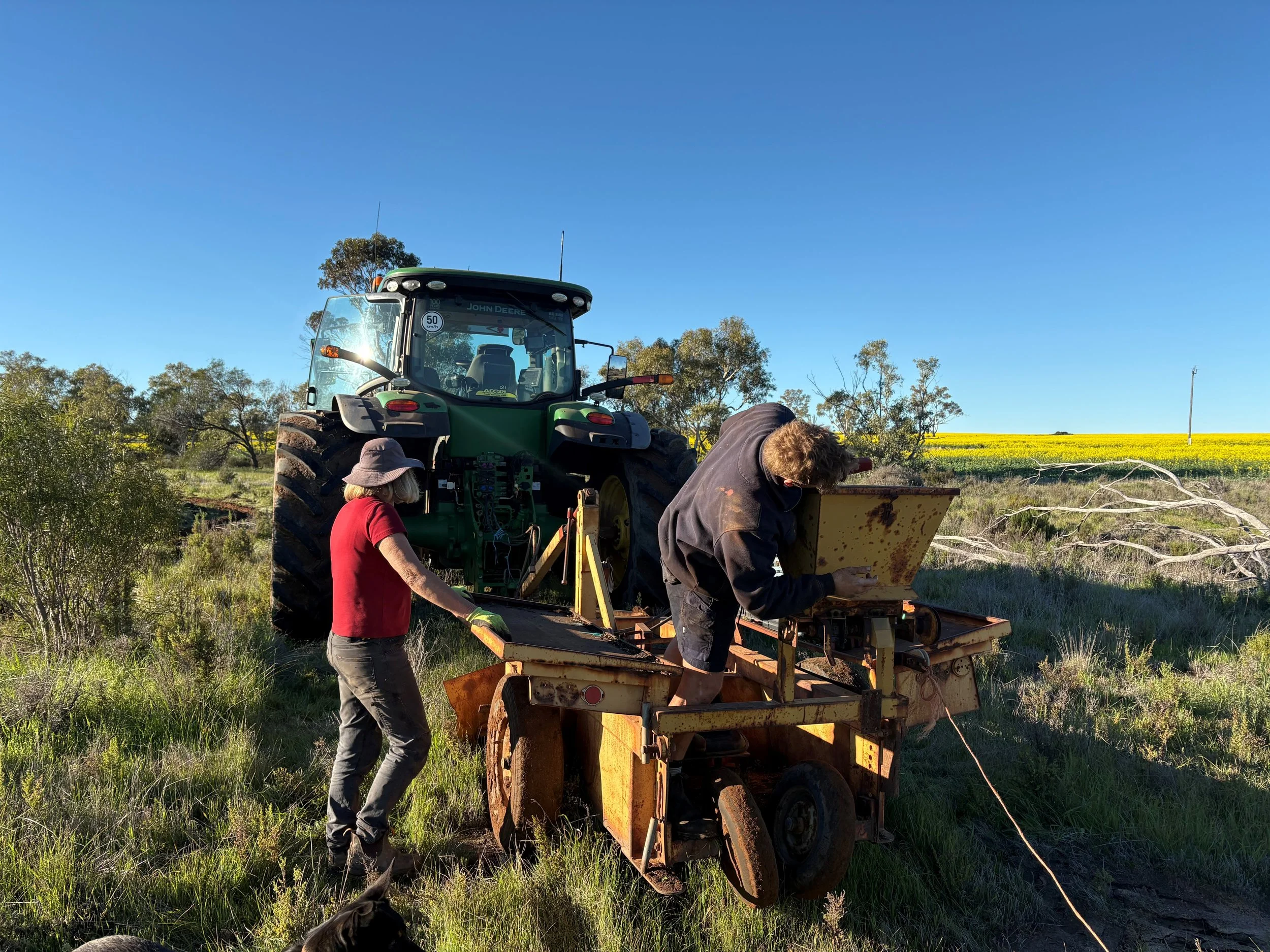
Browne family setting up treeplanter at Kalguddering.
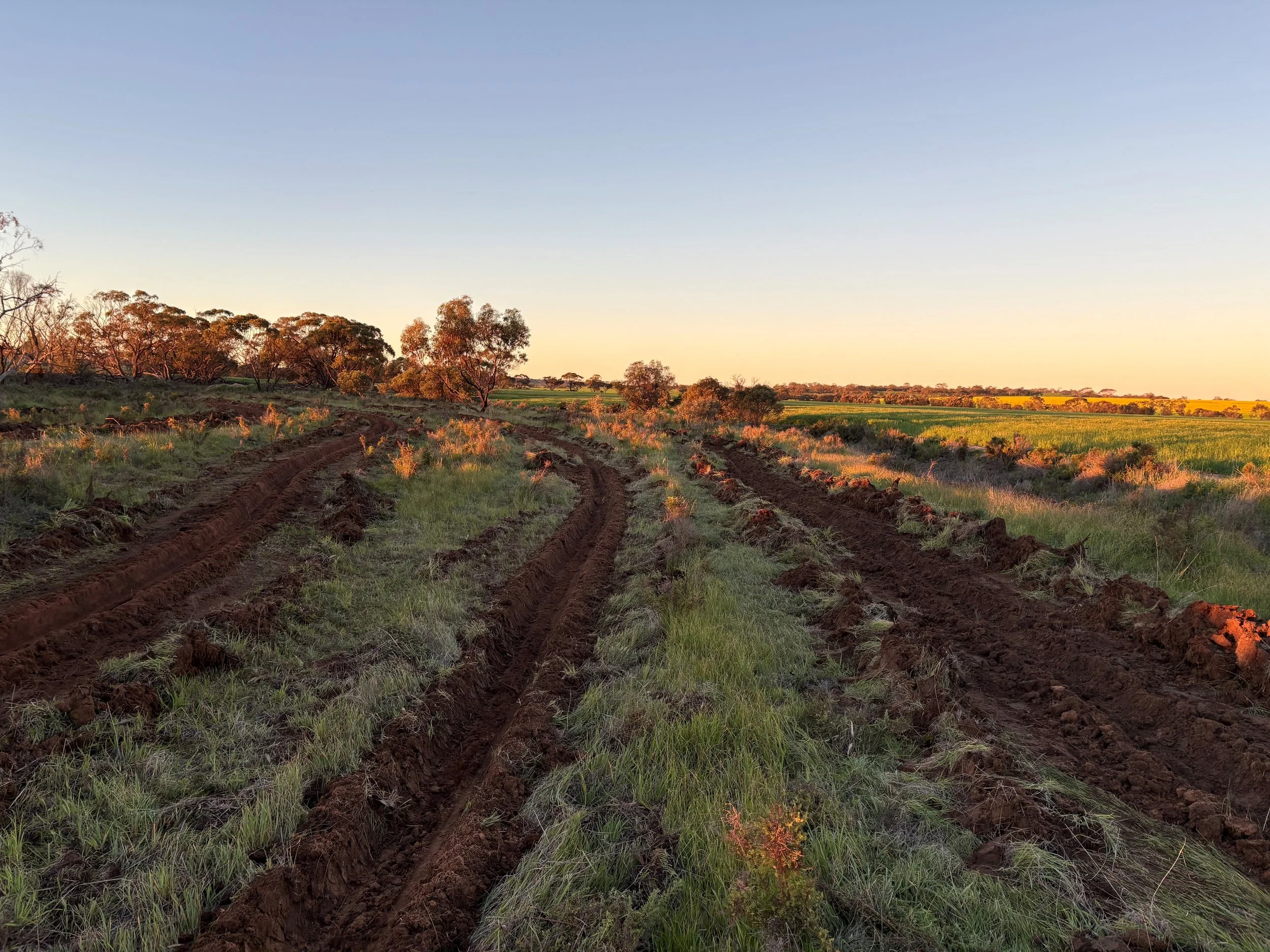
Furrows in Kalguddering with seedlings planted for revegetation.
This project is supported by the State NRM program of WA.
Published eNews #418, September 2026