
Dragonflies: Aerial Predators of our Healthy Waterways
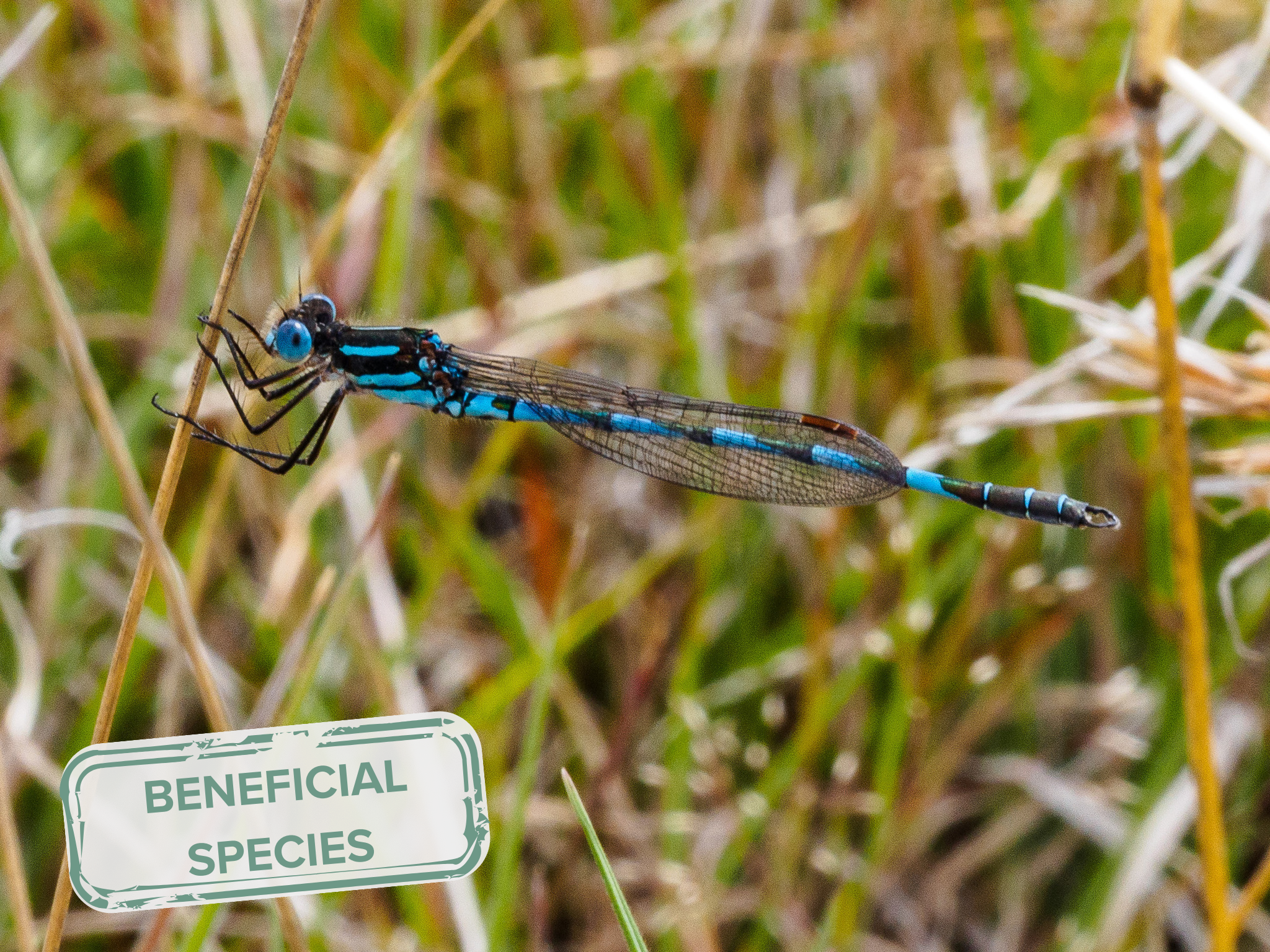
Photo by Andrew Dilley, sourced via the Atlas of Living Australia. Licensed under CC BY‑NC 4.0. Edits have been made to the original image.
Dragonflies (order Odonata) are among the most recognisable and ecologically important insects in the Western Australian Wheatbelt.
Having been around since before the time of the dinosaurs they are fast, agile and highly visual, top invertebrate predators both as adults and in their aquatic juvenile stages. In a landscape characterised by farm dams, seasonal wetlands, creek lines and salt-affected waterways, dragonflies are not just striking, they are indicators of water quality and landscape function.
Dragonflies: The 4-11
Adult dragonflies are powerful fliers with large compound eyes, elongated abdomens and two pairs of strong, transparent wings. They patrol waterways, dams and low-lying paddocks, feeding on mosquitoes, midges and other small flying insects. In agricultural regions such as the Avon River Basin and broader Wheatbelt, this predation contributes to natural pest suppression around livestock watering points, irrigation areas and wetlands.
The life cycle of dragonflies is closely tied to water. Females lay eggs in or near freshwater habitats. The larvae (often called nymphs or naiads) are aquatic predators, living in dams, creeks and wetlands for months or even years depending on species and seasonal conditions. They prey on tadpoles, mosquito larvae and other aquatic invertebrates. When mature, they crawl out of the water onto reeds or banks and emerge as winged adults, leaving behind a dry outer shell (exuvia) which is often used for identification.
Dragonflies in Western Australia and the Wheatbelt
The Wheatbelt presents both challenges and opportunities for dragonflies. Secondary salinity, altered hydrology and nutrient runoff can reduce habitat quality in some waterways. However, well-managed farm dams, vegetated riparian zones and restored wetlands can provide important refuge habitat. Revegetation and fencing of waterways(common in catchment management programs),can improve bank stability, water clarity and invertebrate diversity, all of which benefit dragonfly populations.
Because dragonflies rely on relatively clean freshwater, their presence and diversity can serve as a practical bioindicator for landholders and NRM practitioners. A healthy mix of dragonflies and damselflies around a dam or creek often reflects reasonable water quality and functioning aquatic food webs.
What to look for in the paddock: Dragonfly ID box
Adults
Body shape: Robust, thicker abdomen
Eyes: Very large; usually meet or nearly meet on top of the head
Wings at rest: Held open horizontally or slightly downward
Flight: Strong, direct, fast; capable of gliding and long patrol flights
Behaviour: Often patrol in circuits over dams or along fence lines
Similar-to-but-not-a: Damselfly
Body shape: Slender, delicate appearance
Eyes: Clearly separated on either side of the head
Wings at rest: Usually folded together above the body
Flight: Weaker, fluttering; tend to stay close to reeds or vegetation
Behaviour: More likely to perch low in grasses or sedges
Larvae = Aquatic Nymphs
Found in dams, creeks and wetlands
Predatory with extendable lower jaw used to grab prey
Dragonfly nymphs are bulkier; damselfly nymphs are slimmer and have three leaf-like external gills at the tail
Can you see them? In the Field Clues
Best searching: sunny, low-wind days in spring–autumn
High activity around well-vegetated dam edges and stable water
Numerous dragonflies over a dam in late spring/summer often indicate active breeding
Presence of shed skins (exuviae) that look like dry, empty shells, on reeds confirms successful emergence
High diversity suggests good aquatic habitat quality
Absence in otherwise permanent water may indicate salinity or water quality issues
References
Australian Geographic. (2017, July 24). The damselflies and dragonflies of Australia. Retrieved February 17, 2026, from https://www.australiangeographic.com.au/nature-wildlife/2017/07/the-damselflies-and-dragonflies-of-australia/
Australian Museum. (n.d.). Dragonflies and damselflies – Order Odonata. Retrieved February 17, 2026, from https://australian.museum/learn/animals/insects/dragonflies-and-damselflies-order-odonata/
Australian Museum. (n.d.). What do dragonflies and damselflies look like? Retrieved February 17, 2026, from https://australian.museum/learn/species-identification/ask-an-expert/what-do-dragonflies-and-damselflies-look-like/
Australian National Botanic Gardens. (n.d.). Order Odonata. Retrieved February 17, 2026, from https://www.anbg.gov.au/cpbr/WfHC/Odonata/index.html
Commonwealth Scientific and Industrial Research Organisation. (n.d.). Odonata – dragonflies and damselflies. Retrieved February 17, 2026, from https://www.ento.csiro.au/education/insects/odonata.html
Department of Biodiversity, Conservation and Attractions. (2019). Wildlife and farm dams (Land for Wildlife Note No. 15). Retrieved February 17, 2026, from https://library.dbca.wa.gov.au/Journals/080696/080696-15.pdf
Department of Primary Industries and Regional Development. (n.d.). Dams (excavated earth tanks). Retrieved February 17, 2026, from https://www.dpird.wa.gov.au/environment-and-sustainability/water/dams/
Government of Western Australia. (2023). Aquatic macroinvertebrates. Retrieved February 17, 2026, from https://www.wa.gov.au/service/natural-resources/water-resources/aquatic-macroinvertebrates
Published eNews #412, March 2026