
Native Budworm Pressure Rising Across the Wheatbelt
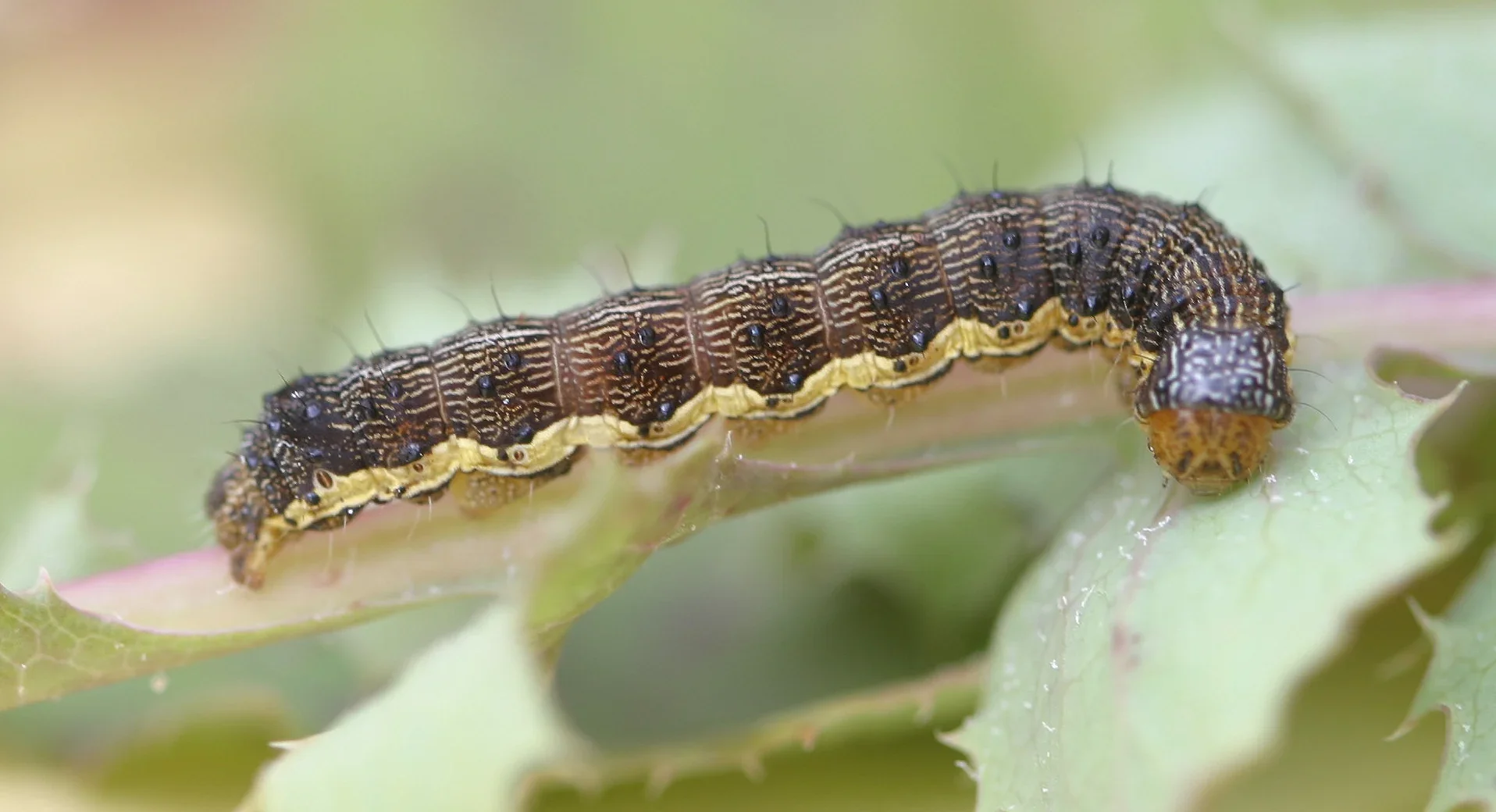
DPIRD WA – Native budworm (Helicoverpa punctigera). Used under Creative Commons Attribution 4.0.
The native budworm (Helicoverpa punctigera) is one of the most economically significant crop pests across the Western Australian Wheatbelt.
Budworm primarily affects broadleaf crops such as lupins, canola, field peas, chickpeas and lentils. Larvae feed on flowers, buds and developing pods, which leads to reduced yield and grain quality.
Highly mobile and capable of long-distance migration, native budworm can build large numbers after inland rainfall and move into cropping regions with very little warning.
Lifecycle and behaviour
Spending the winter outside the Wheatbelt region, Budworm will follow the weather systems and migrate inland after rainfall to breed. These inland rainfall events can trigger breeding, and favourable wind patterns carry adult moths into WA cropping zones. Eggs are laid on host crops, and larvae emerge and begin feeding within days. Multiple generations can occur in a single season, which makes the pest difficult to control in a favourable season, and contributes to high seasonal variability.
Impact on Western Australia and the Wheatbelt
Budworm primarily affects broadleaf crops. Larvae do the most economic damage, particularly during later growth stages when they feed heavily on flowers and pods. Early-stage larvae cause low impact, as feeding on foliage is minor, but as larvae mature, they can cause substantial losses. Because they often feed inside pods, heavy infestations can be difficult to detect without close monitoring.
Monitoring and management
Regular monitoring using sweep nets is essential, particularly during flowering and early pod development. Sweep netting is a key monitoring tool, and control is most effective when larvae are less than ten millimetres long. Thresholds vary depending on crop type, growth stage and market conditions.
Integrated Pest Management is recommended. This approach involves regular monitoring, supports beneficial insects such as shield bugs, damsel bugs, lacewings and spiders, and avoids unnecessary chemical applications that can lead to resistance.
What to look for in the paddock: Native Budworm ID box
Adult moths:
Light brown to grey with darker markings
Wingspan ~30–40 mm
Nocturnal and strongly migratory, so often go unnoticed
Eggs:
Dome-shaped, laid singly on leaves, buds or flowers
White to pale green in colour, which darkens prior to hatching
Larvae (caterpillars):
Colour varies, with specimens being seen in green, brown or a reddish colour
Pale longitudinal stripes along the side
Texture is rough and slightly hairy
Active feeders, often found in the crop canopy
Grow up to ~40 mm
Helpful Links
WA Government spraying threshold
References (APA 7)
Department of Primary Industries and Regional Development. (n.d.). Native budworm (Helicoverpa punctigera). Government of Western Australia. https://www.agric.wa.gov.au Accessed March 25, 2026
Murray, D. A. H., & Zalucki, M. P. (2017). Helicoverpa punctigera biology and management in Australian cropping systems. Crop Protection, 92, 122–131.
Williams, D. G. (2019). Insect pests of field crops in Australia: Identification and management. CSIRO Publishing.
Published eNews #413, April 2026