
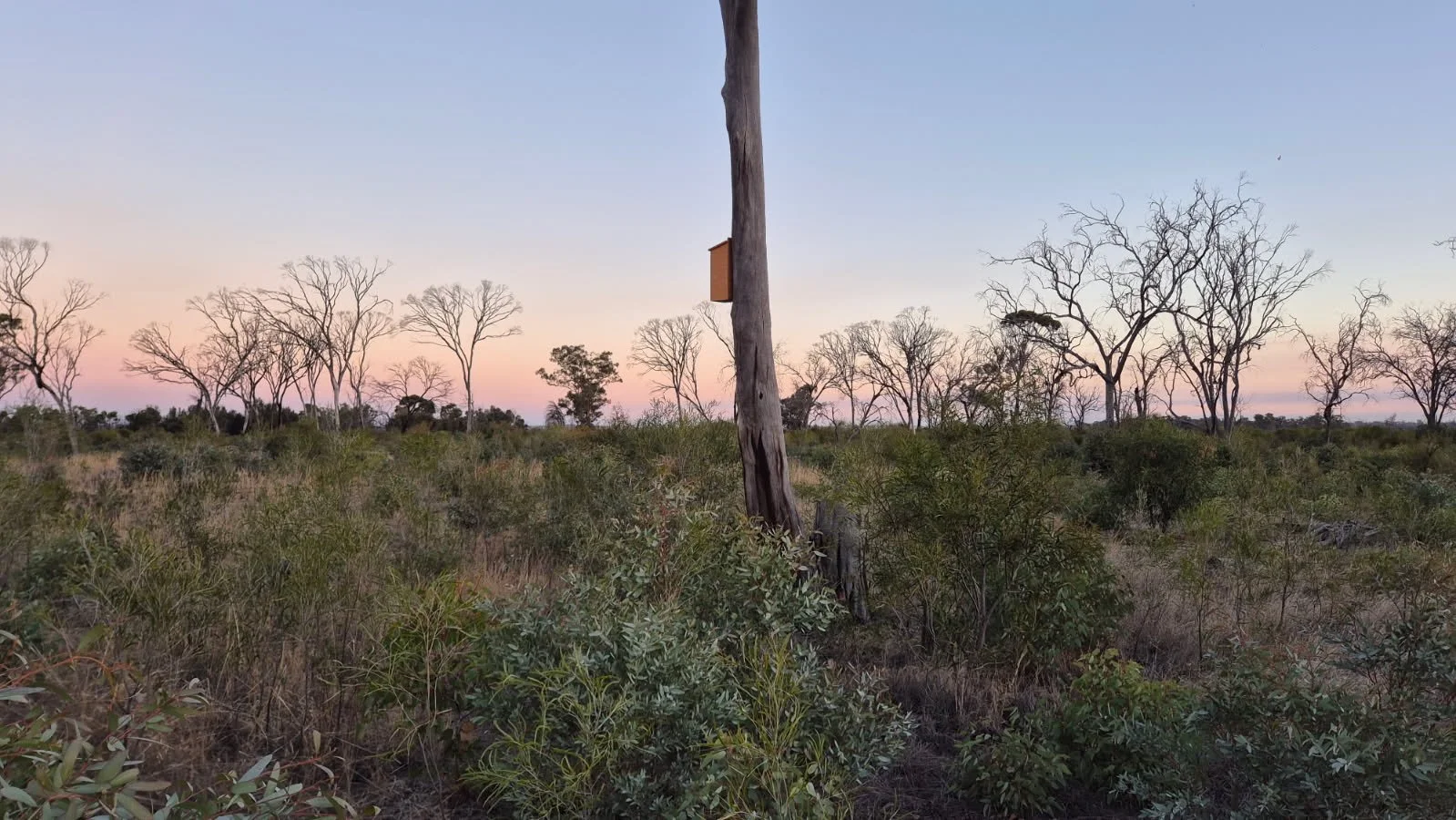
Credit: Angus Armstrong. Parrot box augments habitat in bushfire affected remnant vegetation adjacent to a Forage for Nature planting in Narrogin.
Wheatbelt NRM is partnering with 10 mixed-farming landholders to improve soil health and grazing productivity while simultaneously improving habitat conditions for native wildlife.
This article focuses on the habitat augmentation (improving the environment) activities undertaken in Forage for Nature (FFN). The project has been designed to deliver positive outcomes for both farming and nature by improving agricultural productivity while enhancing habitat for native species.
This season, more than 100 ha of degraded land and unimproved pasture have been converted into perennial forage systems, creating more complex habitats for native species. To address the shortage of natural tree hollows in cleared agricultural landscapes, artificial nest boxes have also been installed across project sites.
Each landholder received 2–3 nest boxes selected to benefit locally occurring species. Box selection was guided by threatened species records, bird surveys, remote monitoring (trail cameras and acoustics devices), and eDNA analysis. This information provided a snapshot of local biodiversity and ensured habitat enhancements were directed where they would have the greatest benefit.
Based on the survey results, Wheatbelt NRM supplied nest boxes designed for microbats, parrots, phascogales and owlet nightjars. All these species are insectivorous or omnivorous providing valuable ecosystem services such as pest insect control and pollination. Their activities help reduce crop damage caused by insects and transfer pollen between plants.
However, it is difficult to quantify the value of the of these ecosystem services to the farming system as nature's benefits are diverse, lack market prices, and are deeply interconnected (a challenge for Natural Capital Accountants)!
There are seven species of microbat known to occur in the Wheatbelt, with at least two recorded at every site. Parrot boxes are versatile and can be occupied by a range of species, alleviating competition for natural hollows.
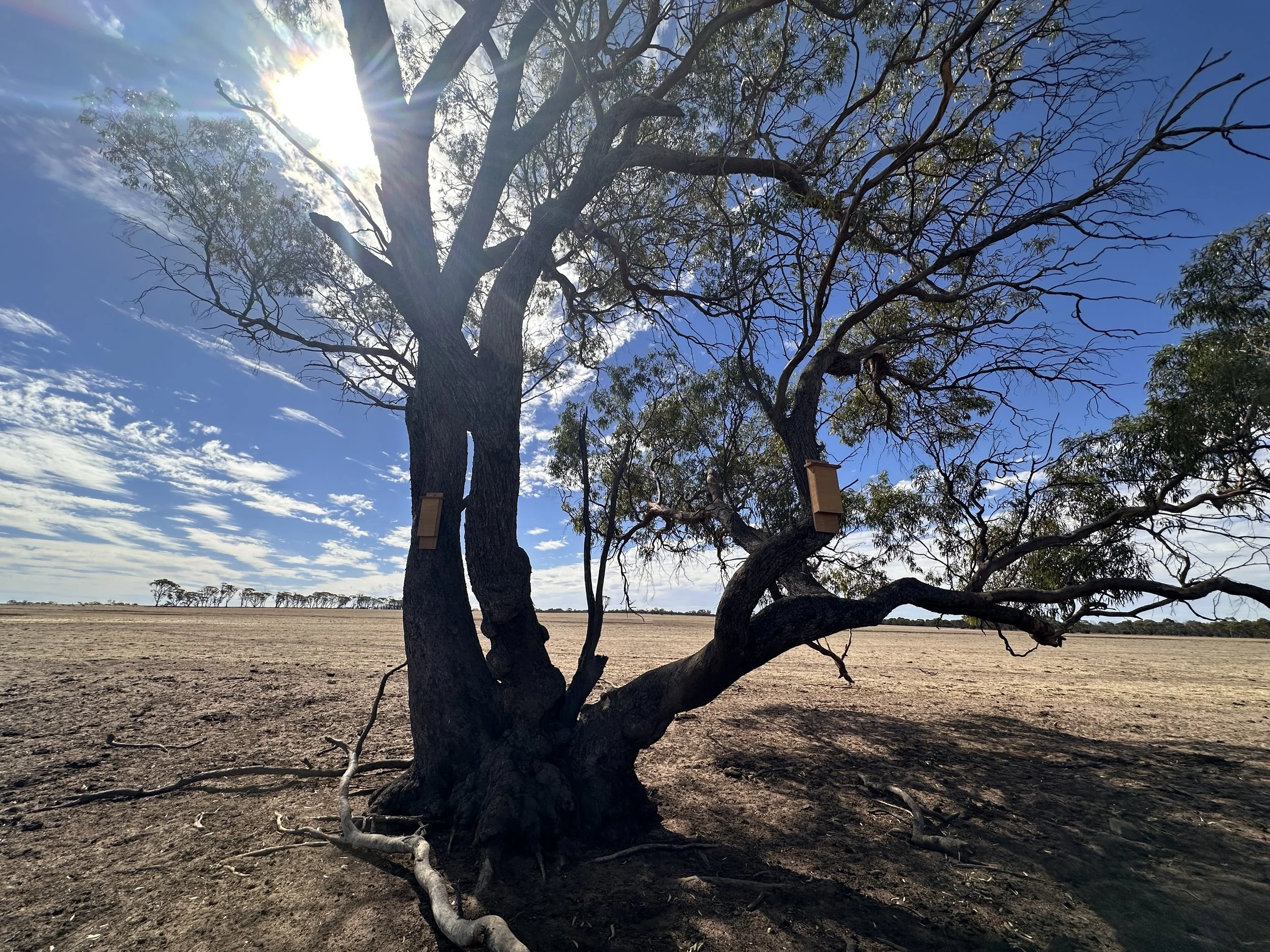
Clustered microbat boxes installed on the shaded side of a York Gum in a Forage for Nature project area in Dowerin.
Endangered red-tailed phascogales were captured on camera at one site, while DBCA records showed them to be historically present near other sites. Owlet-nightjars are widespread in the Wheatbelt but heavily reliant on mature tree hollows that are scarce in the Wheatbelt.
In addition to installing artificial wooden nest boxes, Forage for Nature project landholders have been encouraged to further improve habitat by retaining or repurposing hollow logs, paddock rock piles and mallee roots.
Brenton Tyson and his family took this approach one step further and worked on improving a saline artificial wetland inside their Forage for Nature planting area. The family saw an opportunity to improve habitat using a feature that was otherwise a liability on the site.
Brenton, Justine and their four children spent three hours with Wheatbelt NRM staff planting 250 salt tolerant sedges and shrubs around the wetland and removing weeds including piles of Salsola australis (prickly saltwort or roly poly/tumbleweed) that had blown into the water.
Large branches were placed on the water to provide complex habitat for aquatic macroinvertebrates and perching opportunities for birds. The family wanted to make the wetland more beautiful by cleaning out the weeds, encourage more animals to access the water and improve the water quality.
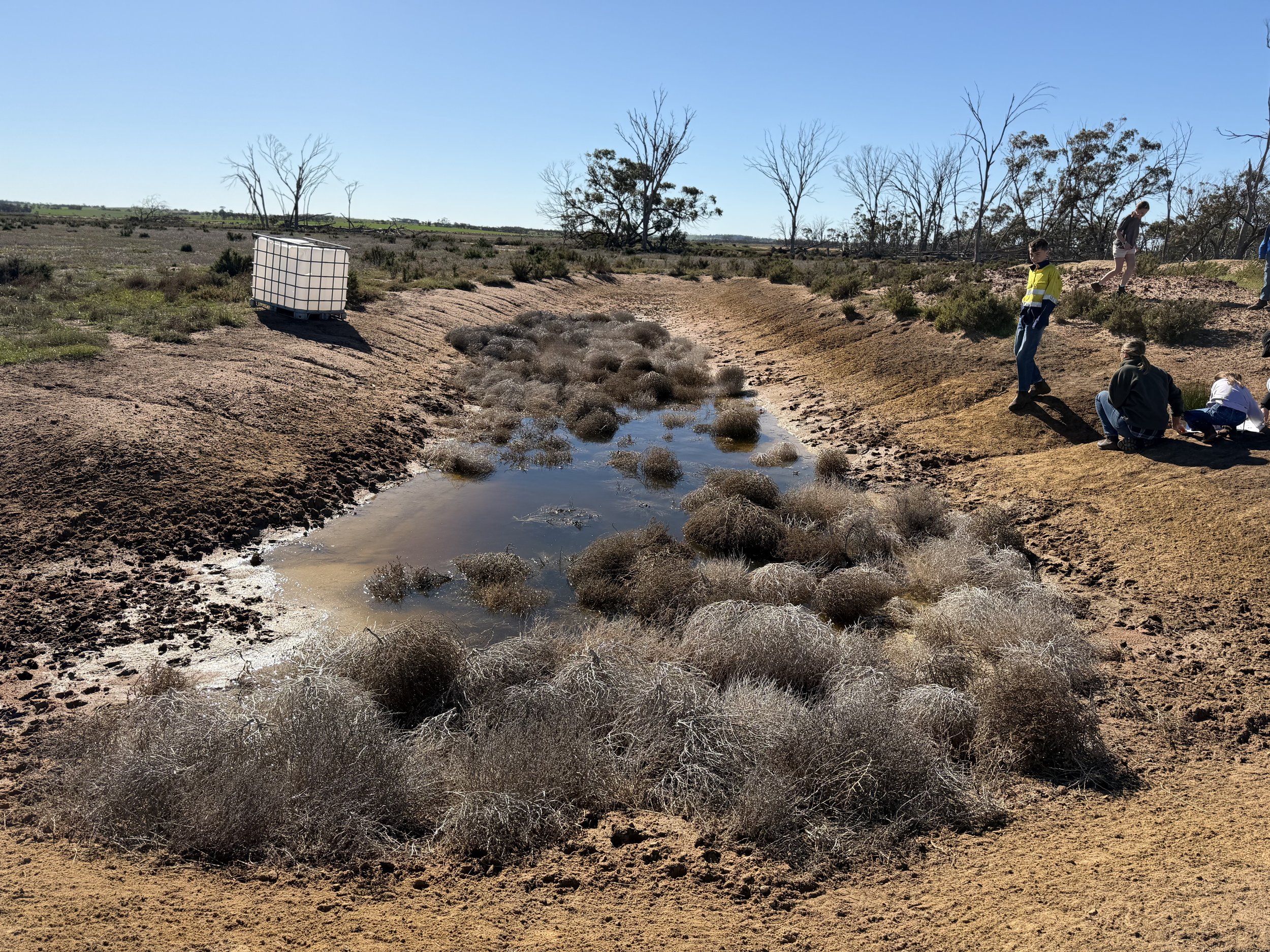
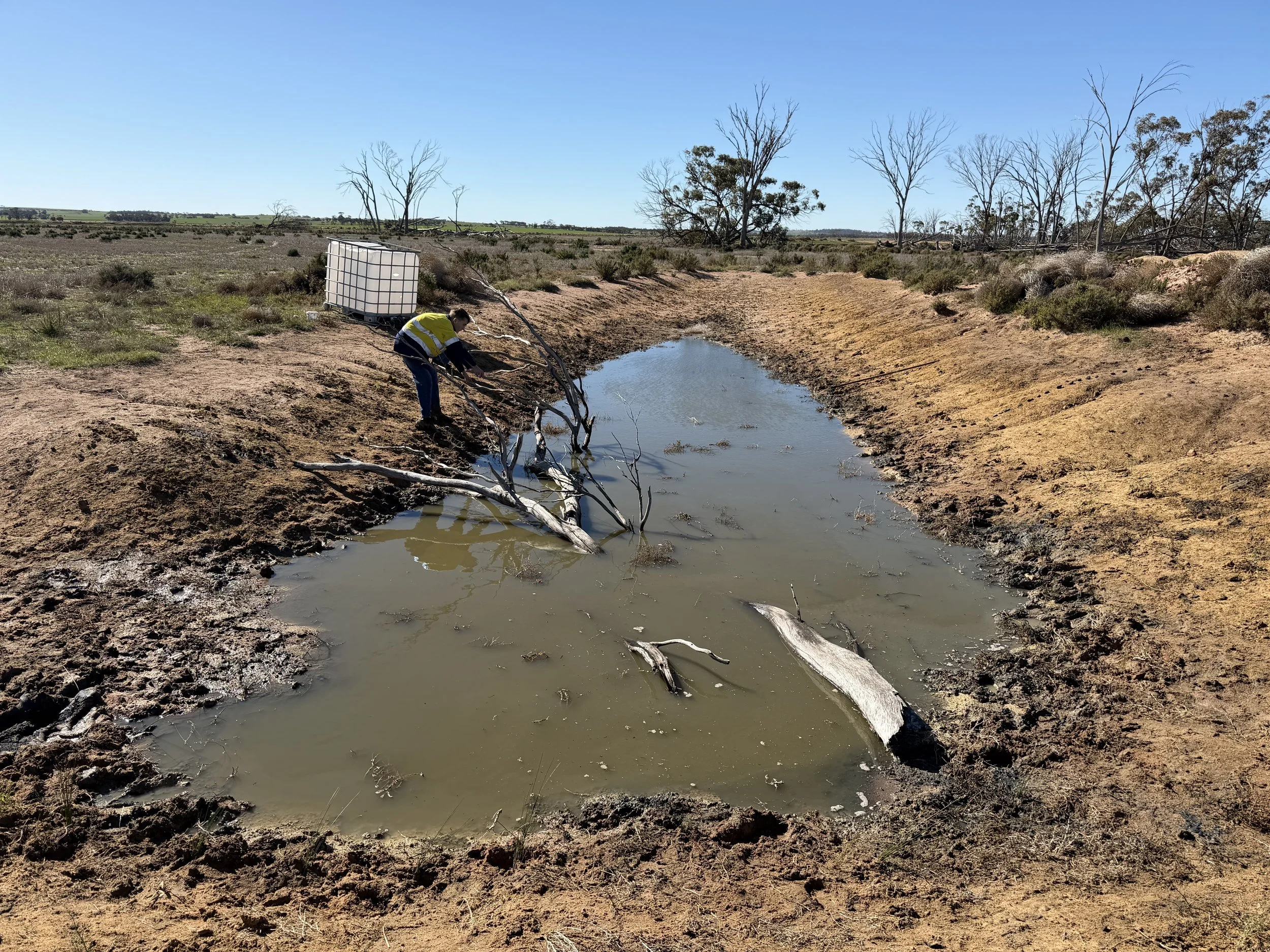
Wetland in the Forage for Nature site before (top) and after (bottom) rehabilitation by the Tyson family.
FFN is also supporting landholders to undertake three years of feral animal control to reduce predation and maximise the benefits of habitat augmentation activities.
Further reading:
Habitat requirements of the endangered red-tailed phascogale, Phascogale calura
Funding acknowledgment:
Forage for Nature is supported by the Australian Government through funding from the Natural Heritage Trust under the Climate-Smart Agriculture Program and delivered by Wheatbelt NRM Inc., a member of the Commonwealth Regional Delivery Partners panel.
Published eNews #417, August 2026