
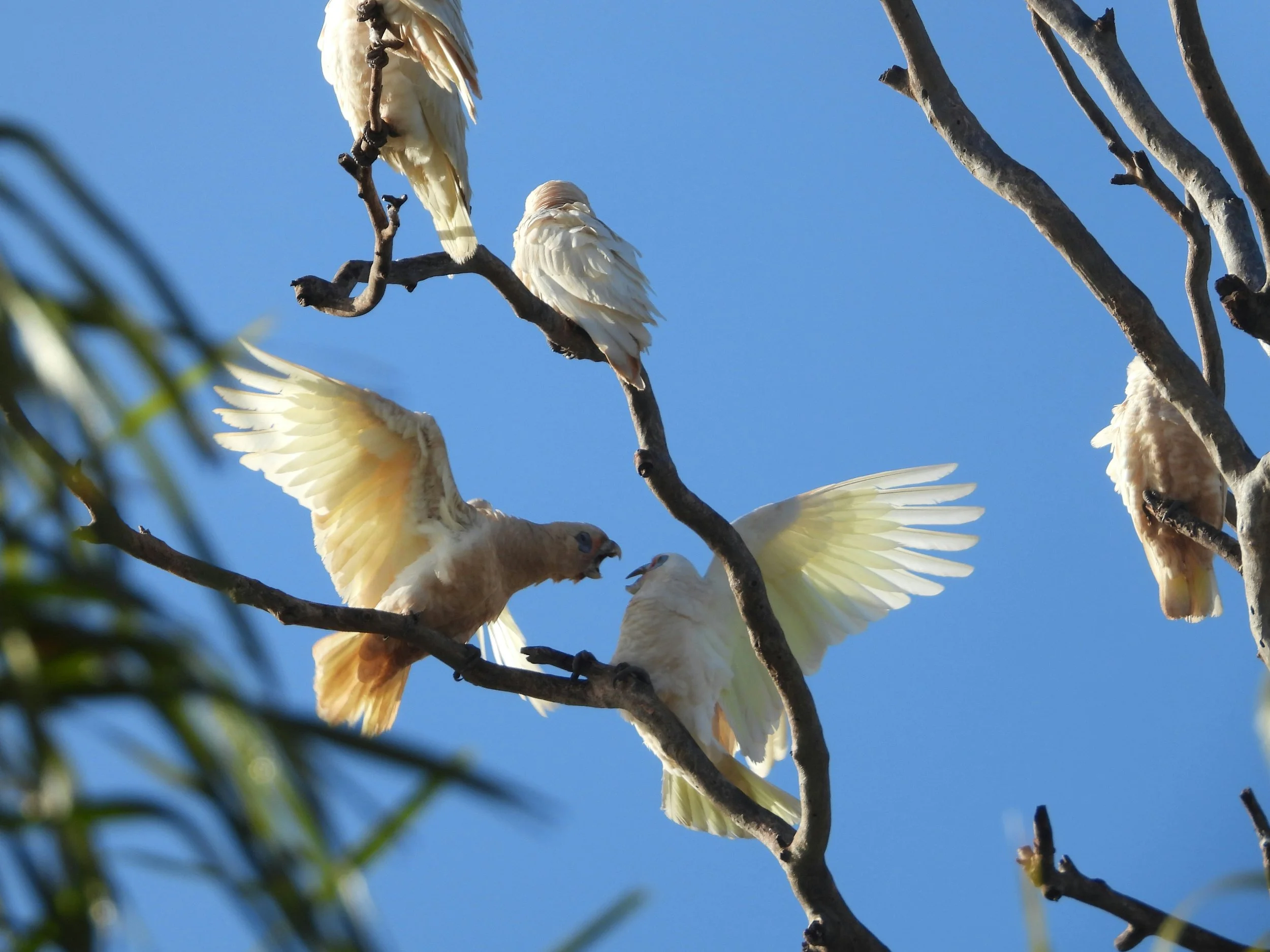
Why are corellas so successful in the WA Wheatbelt? Which species are living in the region? What is the genetic variability among local populations?
These are just some of the questions Wheatbelt NRM and researchers from Edith Cowan University hope to answer through the Discovering the Ecology of Wheatbelt Corellas project.
This spring, ornithologists Associate Professor Rob Davis and postgraduate Nathan Yaschenko will train two of Wheatbelt NRM's Noongar Boodja Rangers to investigate corella nesting hollows and monitor bird behaviour across the Wheatbelt.
Using specialised hollow inspection cameras, the team will record breeding activity, including the presence of eggs and chicks. They will also monitor active and inactive nesting hollows, roosting sites and habitat types, while observing behaviours such as feeding, foraging, flock movements and vocalisations. Information on flock size, the proportion of adult and juvenile birds, and the species present will also be collected.
A key part of the project is analysing the DNA of corella populations across the region. This research will help determine whether local populations consist of pure species or whether hybridisation has occurred between different corella species, or even with other cockatoos such as galahs. The findings will provide valuable new insights into the ecology and management of Wheatbelt corellas, with the DNA analysis expected to be completed later this year.
The results of the project will be shared through a series of fact sheets and community workshops towards the end of the year. This project is supported by funding from the Western Australian Government’s State NRM Program.
Can you help?
If you know of a corella nesting hollow or roosting site on your property and are willing to provide access for research, Wheatbelt NRM would love to hear from you. Please contact Jacquie Lucas at jlucas@wheatbeltnrm.org.au or phone 0499 389 134.
Published eNews #417, August 2026