
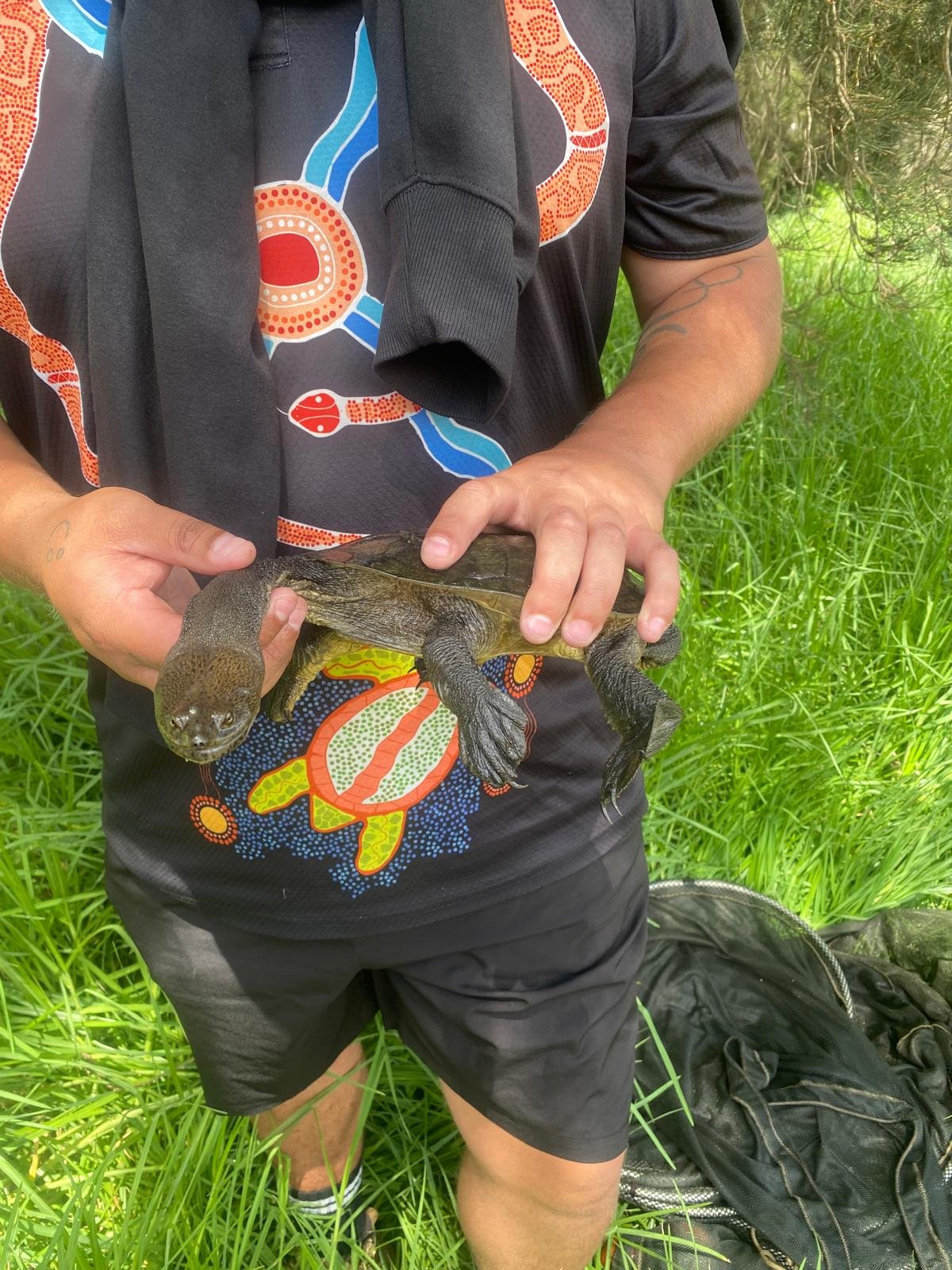
There’s more to the Avon River than meets the eye! The Noongar Boodja Rangers recently joined the Department of Water and Environmental Regulation team for Healthy Rivers surveys across the Avon Region, getting up close with the aquatic wildlife that calls these waterways home.
The surveys focused on assessing river health and identifying the fauna and flora living in and around the river. It was a great opportunity for the Rangers to get hands-on experience in environmental monitoring, work alongside department specialists and learn more about the health of our local waterways.
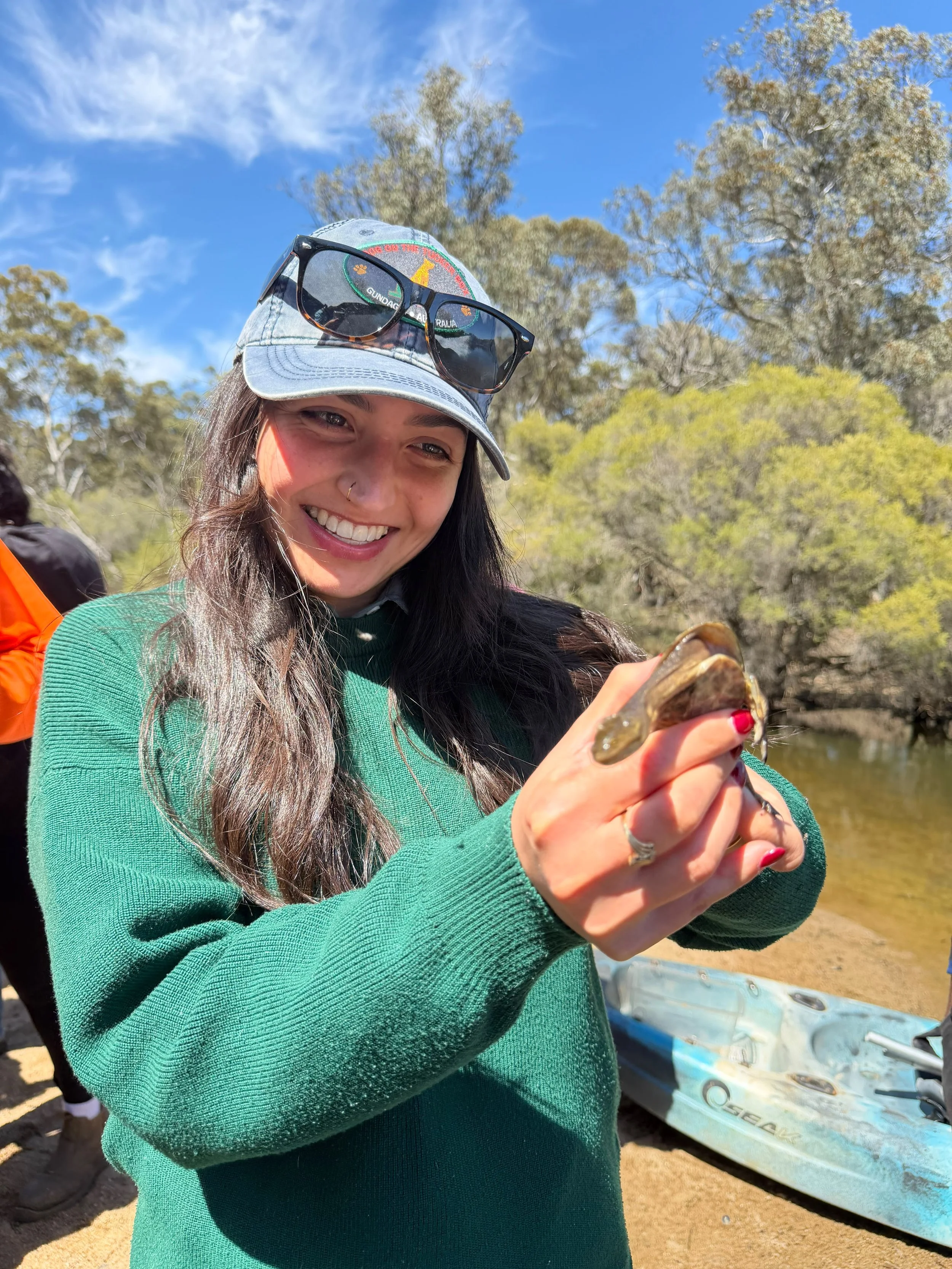
Project Manager Divya LaBrooy holding a south-western snake-necked turtle (Chelodina oblonga).
And the wildlife certainly didn’t disappoint! The team recorded plenty of fascinating native aquatic species, each playing its own role in the river ecosystem.
These included the South-western Snake-necked Turtle (Chelodina oblonga), a freshwater turtle well known for its distinctive long neck.
The team also found the Nightfish (Bostockia porosa), a native freshwater fish that is most active after dark, and the Restricted Gilgie (Cherax crassimanus), a freshwater crayfish found in parts of south-western Australia, and plenty of South-west glass shrimp - Palaemon australis
One particularly exciting discovery was the Rakali, also known as the Native Water Rat (Hydromys chrysogaster). This semi-aquatic mammal is an excellent swimmer and an important part of Australia's freshwater ecosystems. With its webbed hind feet and aquatic lifestyle, the Rakali is well suited to life in and around our rivers.
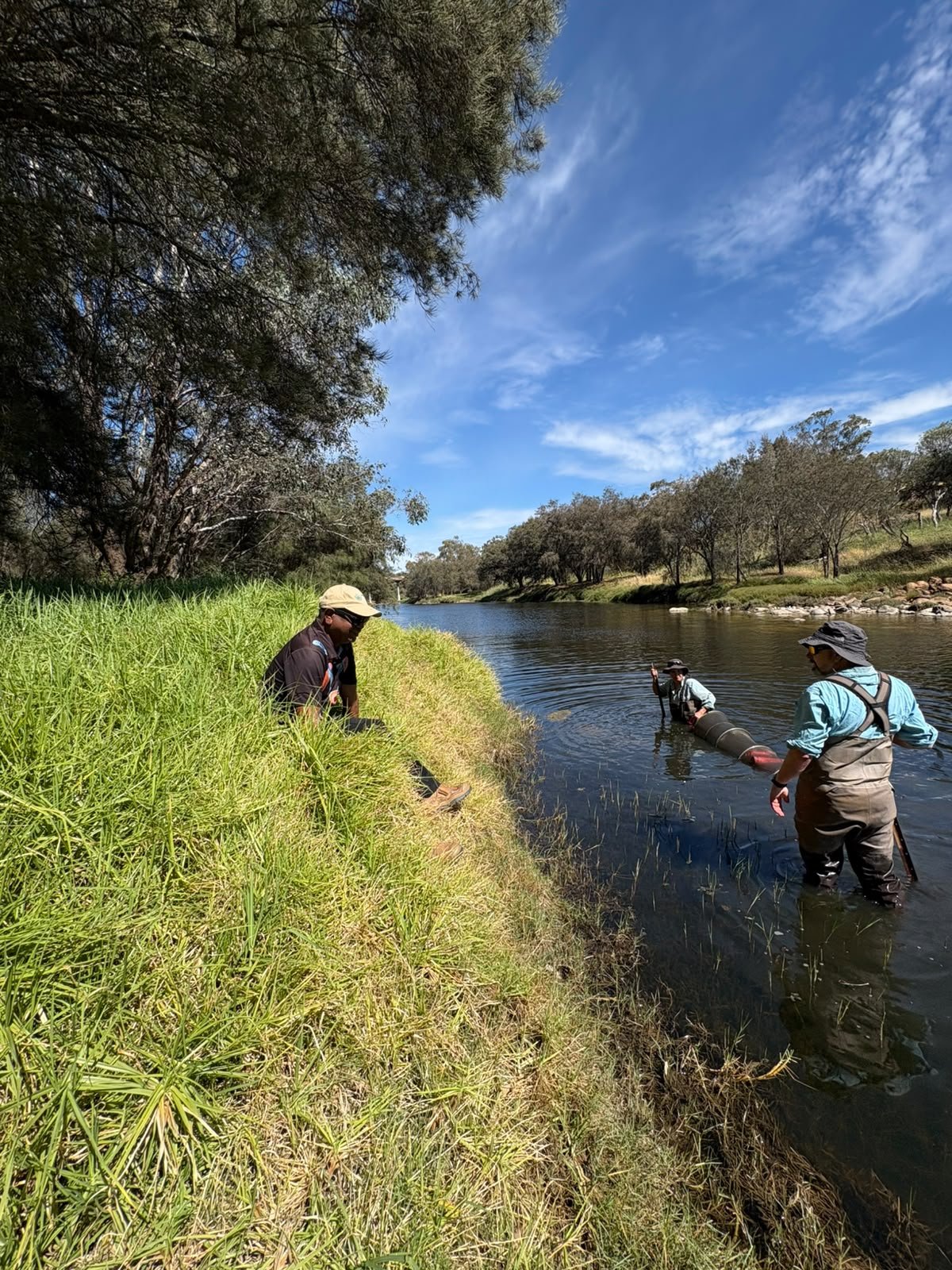
Ranger observes how DWER Healthy River Officers set up fyke nets adjacent to the Avon Riverbank in Toodyay. Fyke nets “heard” fish into traps baited with chicken feed.
Finding these species helps build our understanding of the biodiversity supported by the Avon River and provides valuable information to guide future river management and conservation efforts. Healthy waterways provide essential habitat, food and shelter for a diverse range of native wildlife, making ongoing monitoring an important part of caring for Country.
For the Noongar Boodja Rangers, the surveys were also an opportunity to strengthen partnerships, share knowledge as well as build practical skills in environmental assessment. Combining scientific monitoring with local knowledge and on-ground experience helps strengthen our collective efforts to protect the natural values of the Wheatbelt.
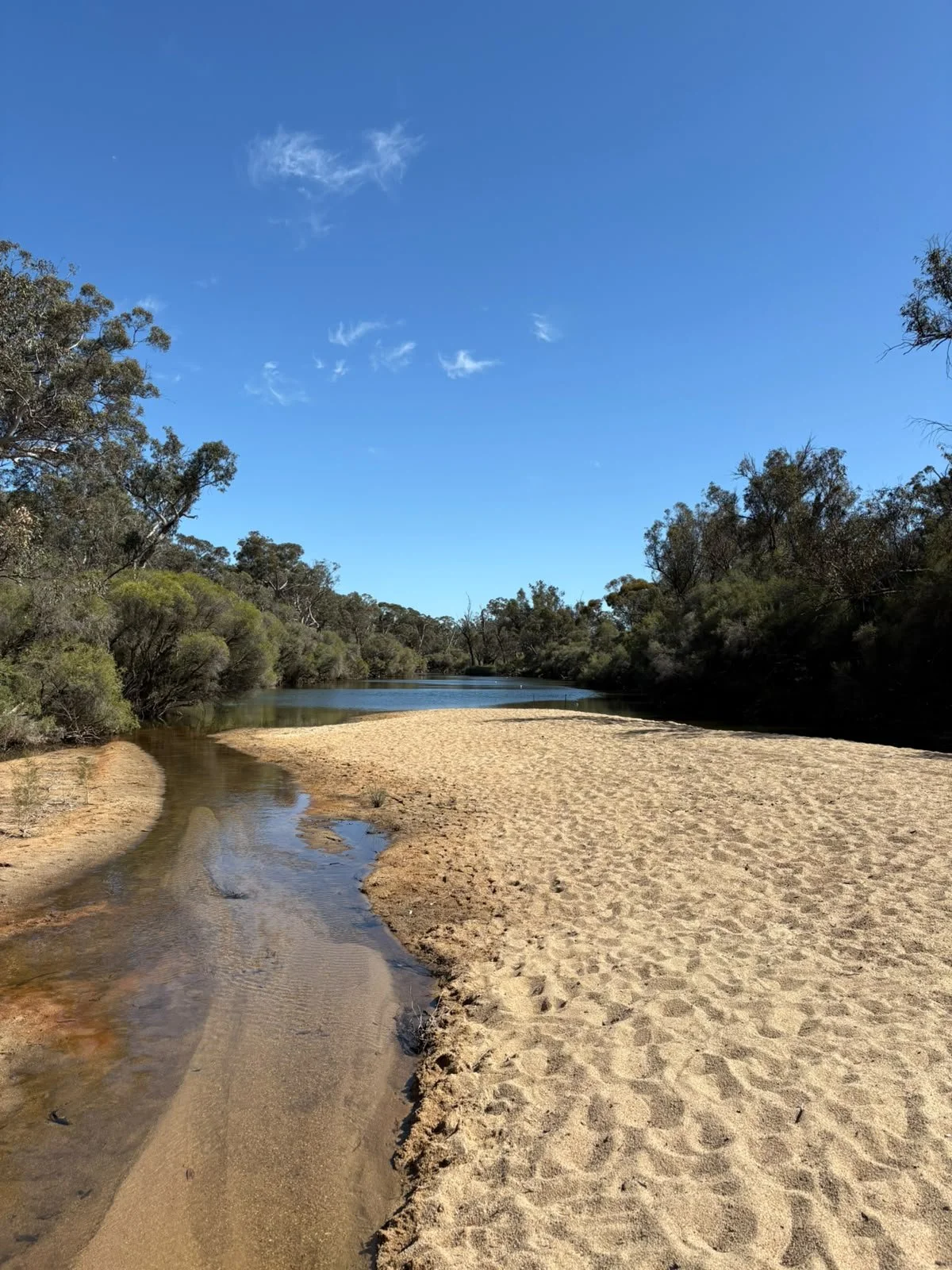
Sediment accumulation in Reserve Pool, Dale. Due to altered hydrology systems, sediment has eroded upstream and deposited into sandbars, disrupting natural flows.
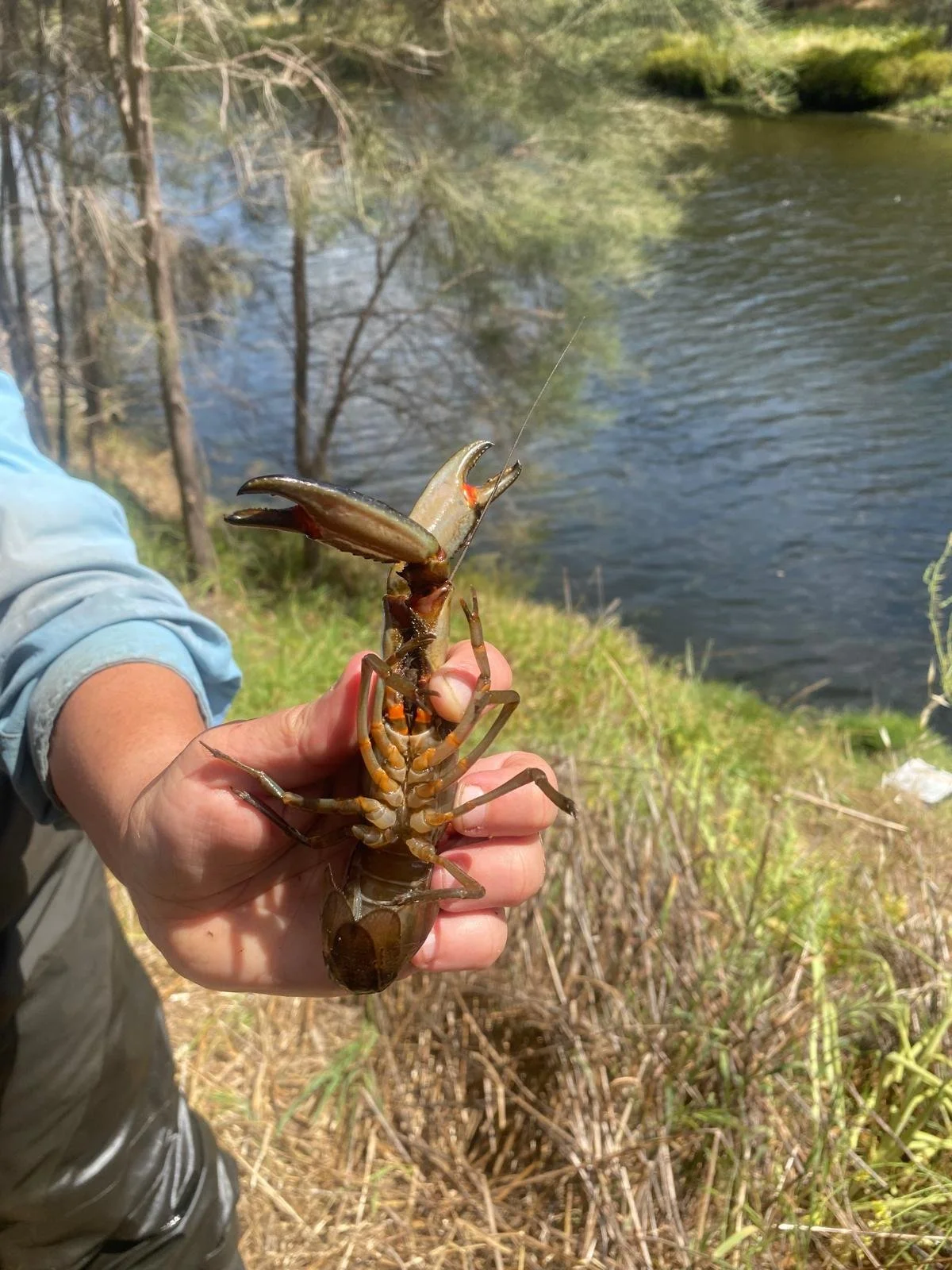
Gilgie, a freshwater crayfish species, pulled from the fish trap in the Avon River, Toodyay. An unexpected find, considering the high levels of salinity in the water. Gilgies are resilient and have adapted to surviving seasonal dry periods by burrowing down into the water table.
The Avon River is home to a remarkable range of life, and sometimes you need to look a little closer to discover just how much is happening beneath the surface!
Subscribe to our e-newsletter and keep up to date on current events, partnership opportunities, and NRM in the Wheatbelt.
Published eNews #420, November 2026