
Discovering the Ecology of Wheatbelt Corellas
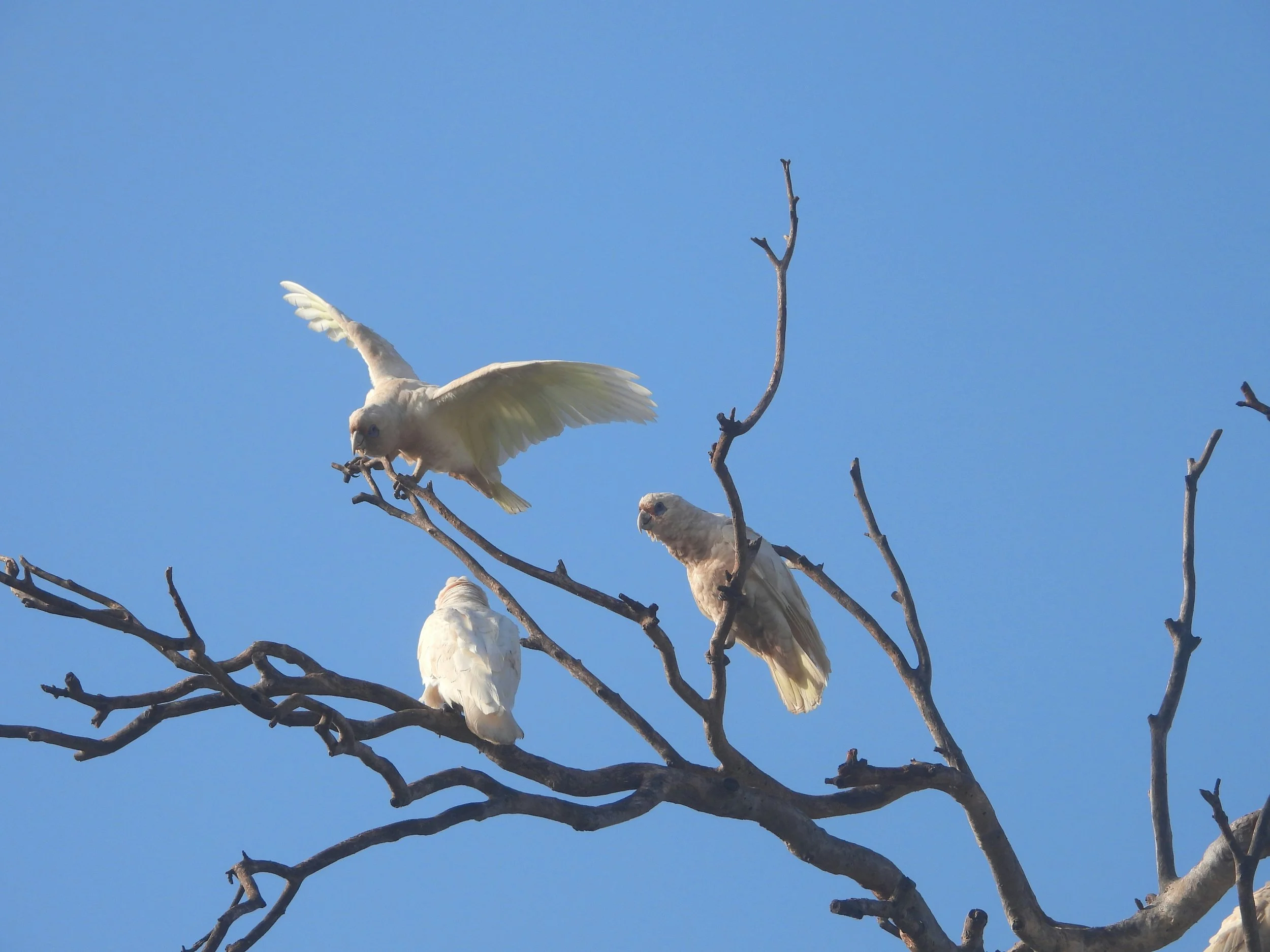
Corellas in the Wheatbelt are currently poorly understood. While large flocks are known to cause significant disruption in some Wheatbelt towns, important questions remain about their species composition, population status, and ecology.
This project will investigate key questions, including: What species make up corella populations across the region? Are native corella populations in the central and northern Wheatbelt stable, or are they facing threats? To what extent is interbreeding occurring between native species and introduced pest species?
Through this Wheatbelt NRM project, which is funded by the Western Australian Government’s State NRM Program and completed in collaboration with Edith Cowan University, we aim to build a deeper understanding of corella ecology in the region. This knowledge will help ensure that future management of pest populations is informed, targeted, and minimises unintended impacts associated with poorly informed control measures.
Members of the Noongar Boodja Ranger team will receive training from Edith Cowan University in field observation techniques and corella monitoring methods, supporting local capacity to contribute to ongoing research and conservation efforts.
Intended outcome of project
The intended outcome of this project is to develop a clearer understanding of corella ecology, population dynamics, and species composition across the Western Australian Wheatbelt to support effective and sustainable management practices in the future.
How you can help
Community members are invited to record corella sightings and observations through the Corella Behaviour Survey. Your contributions will help researchers understand where corellas occur, how populations are changing, as well as how they interact with the Wheatbelt landscapes.
This project is supported by funding from the Western Australian Government’s State NRM Program.
