
The Blue-Banded Bee - A Native Pollinator
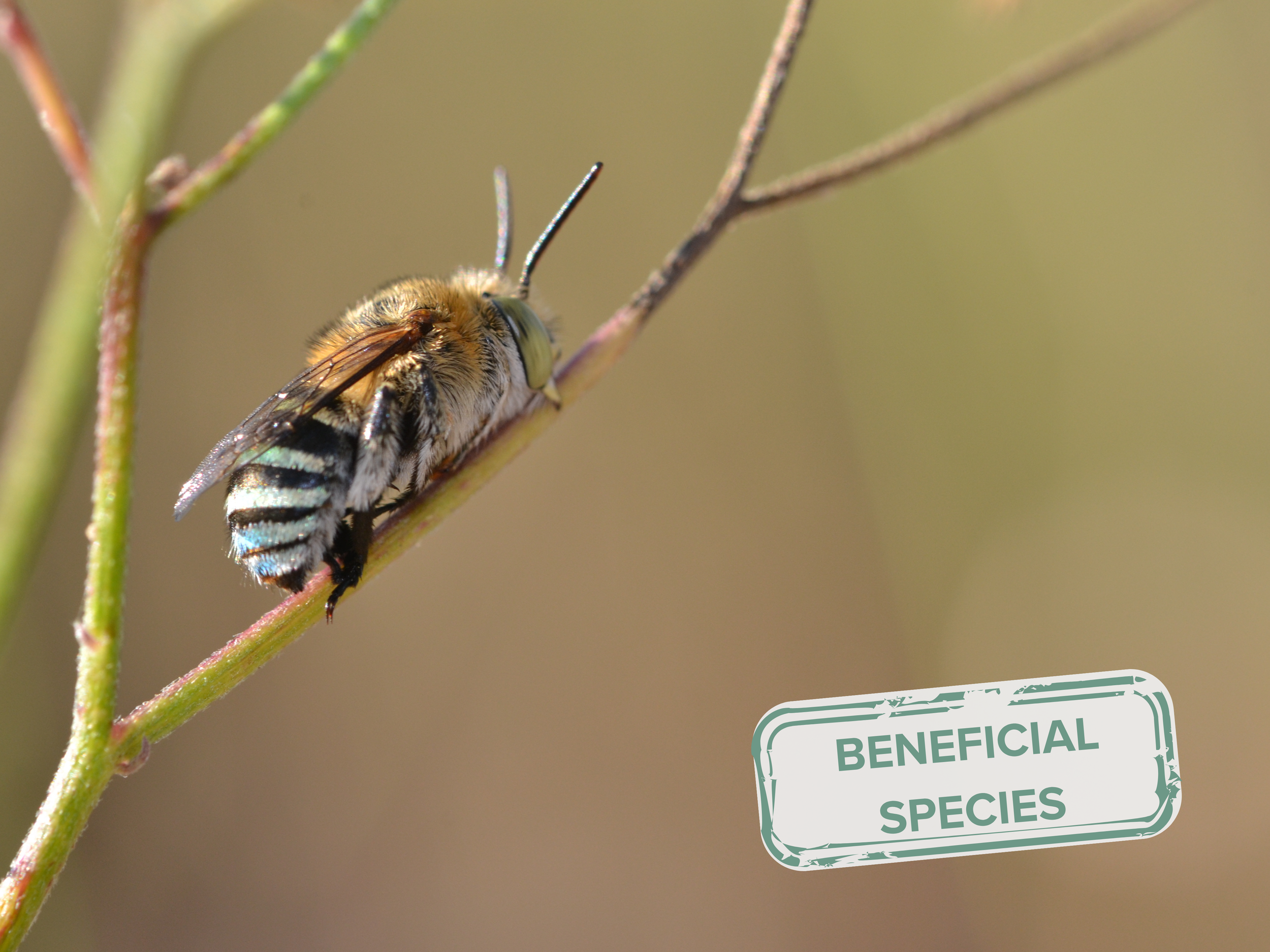
The Blue-Banded Bee (Amegilla species) is one of Australia’s most recognisable native bees, known for its striking metallic blue stripes and rapid hovering flight. Found throughout the Avon River Basin and wider wheatbelt region, these solitary native bees play an important role in pollinating native vegetation, gardens and agricultural crops.
Unlike European honeybees, Blue-Banded Bees are native to Australia (alongside another 2000 or more native bee species!) and have evolved alongside many of our flowering plants. They are particularly active during the warmer months and are often spotted darting quickly between flowers in bushland remnants, revegetation sites, road verges and home gardens. Their fast, erratic flight and loud buzzing can make them difficult to photograph, but they are harmless to humans and highly beneficial to ecosystems and farming landscapes alike.
Blue-Banded Bees are capable of “buzz pollination,” a specialised technique where they vibrate flowers to release pollen. This makes them especially valuable pollinators for plants such as tomatoes and eggplants, as well as many native species.
Habitat and behaviour
Blue-Banded Bees prefer sunny environments with plenty of flowering plants. Across the wheatbelt they are commonly associated with flowering native shrubs and wildflowers during spring and early summer. Unlike honeybees, these bees are solitary nesters. Females construct small burrows in soft clay banks, mudbrick walls or compacted soil, where they lay eggs individually. Although many nests may occur close together, each female maintains her own nest tunnel.
Providing native flowering plants and reducing unnecessary insecticide use can help support native bee populations across farms, gardens and revegetation projects. Native pollinators such as Blue-Banded Bees contribute to biodiversity and improve ecosystem resilience in fragmented landscapes.
Importance in the Wheatbelt
Pollinators are critical for healthy ecosystems and productive agricultural systems. While European honeybees receive much of the attention, native bees also provide substantial pollination services across Australia. In landscapes like we find in the Wheatbelt, where habitat fragmentation and changing climatic conditions place pressure on biodiversity, protecting native pollinator habitat is increasingly important. Flowering corridors, remnant vegetation and diverse farm plantings all help sustain beneficial insects including native bees, hover flies, lacewings and parasitic wasps.
What to look for in the paddock or garden: Blue-Banded Bee ID Box
Adult bees:
Distinct bright blue metallic bands across the abdomen
Approximately 10–12 mm long
Fast hovering flight pattern
Often seen visiting flowers during warm sunny weather
Behaviour:
Solitary native bee
Nests in clay soils, mud walls or soft mortar
Performs “buzz pollination” by vibrating flowers
Favourite plants:
Native wildflowers
Lavender and salvias
Tomatoes and other solanum crops
Daisy and pea-family flowers
Good news for landholders:
Important native pollinator
Harmless and non-aggressive
Supports biodiversity and ecosystem health
References
Australian Museum. (n.d.). Blue-banded bees. Australian Museum. https://australian.museum/learn/animals/insects/blue-banded-bees/
Canberra Organic Growers Society. (2020). Beneficial insects. https://cogs.asn.au/beneficial-insects/
Department of Climate Change, Energy, the Environment and Water. (2023). Australia’s native pollinators. Australian Government. https://www.dcceew.gov.au/environment/biodiversity/pollinators
Earthwatch Institute Australia. (2021). Native bees and pollination in Australian landscapes. https://earthwatch.org.au
Eastern Hills Catchment Management Program. (2013). Common seasonal pests and beneficial insects. https://www.eh.org.au/documents/item/681
Hall, M. A., & Steiner, R. (2019). Insect pollination in Australia: Native bees and agricultural systems. CSIRO Publishing.
Threlfall, C. G., Mata, L., Mackie, J. A., Hahs, A. K., Stork, N. E., Williams, N. S. G., & Livesley, S. J. (2015). Increasing biodiversity in urban green spaces through simple vegetation interventions. Journal of Applied Ecology, 52(1), 187–196. https://doi.org/10.1111/1365-2664.12382
Published eNews #415, June 2026