
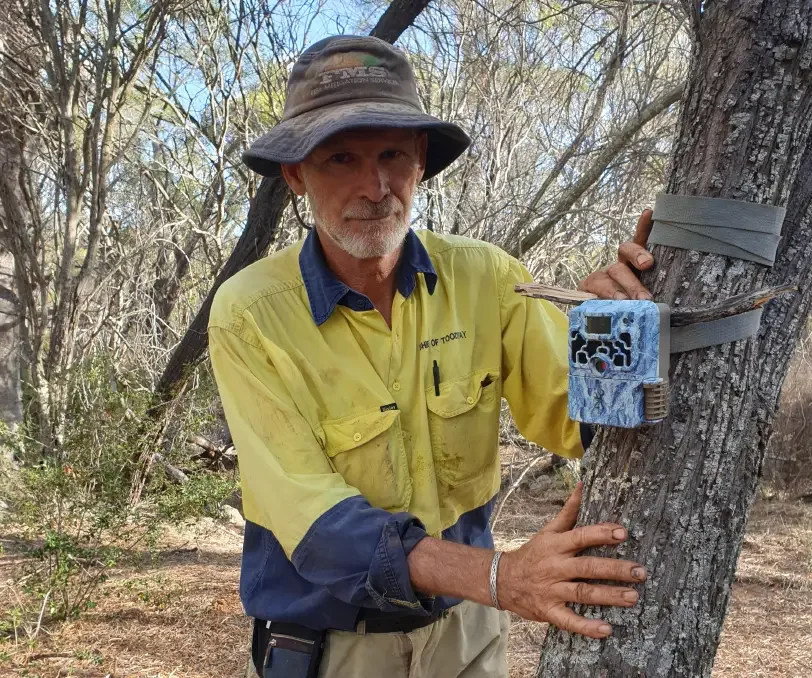
For more than 30 years, Greg Warburton has dedicated his time to environmental conservation in the Wheatbelt.
Greg has spent a considerable amount of that time working on weed management and revegetation projects, as well as river restoration and community conversation, and has worked alongside landholders, volunteers and environmental organisations to care for the beautiful yet extremely vulnerable landscapes of the Wheatbelt.
As he prepares to leave Western Australia with his wife Vickie and embark on a journey to New South Wales, Greg reflects on his experiences that shaped his environmental path and the lessons he hopes will continue to inspire others.
“Ever since I was young, I’ve been interacting with the environment,” Greg said.
While his early interests centred on wildlife, it was the Avon River that ultimately captured his attention.
“That’s where this wonderful Avon River really attracted me,” he explained. “It was through the Avon River that I learned to explore environmental attachments.”
What began as curiosity soon developed into a lifelong commitment to understanding the river and advocating for its protection.
A moment that left a lasting impression on Greg was learning about the river training schemes carried out along the Avon River during the 1950s and 1960s.
The works were designed to improve drainage and reduce flooding, but they also had significant environmental consequences.
During the 2000s, Greg walked sections of the Avon River to better understand the long-term impacts of those changes.
“I was able to see firsthand the impact that program had.”
Even decades later, the evidence remained visible.
“You could even still see in the riverbed where the bulldozers ripped the riverbed in an effort to get the sediment to move and channelise the river.”
Greg observed widespread degradation along the river corridor, including sediment movement, weed infestations, vegetation loss, and changes to water quality.
“The river will never get back to how it really was,” he said.
He recalls hearing stories from local people about deep permanent pools that once provided important refuge to wildlife.
“There are people that remember in the sixties and seventies that those pools were so deep you couldn’t actually reach the bottom of them.”
Today, many of those pools have been significantly altered by sedimentation and other environmental pressures.
However, seeing these changes only inspired Greg to act, and through his volunteer work, he eventually got involved in environmental projects more professionally.
One of the major projects he became involved in focused on controlling invasive weeds along the Avon River.
“We got federal funding to do a weed project along the entire length of the Avon.”
The project targeted species including bridal creeper and tamarisk, both of which posed significant challenges for the health of the river.
“Bridal creeper was one of the species we spent a lot of time managing,” Greg explained.
The work involved extensive monitoring and applying control measures, as well as conducting ongoing follow-up treatments.
“It was a big job and consistency was really important.”
When asked about the most rewarding parts of his career, Greg reflected on revegetation and habitat restoration projects that he was part of in the Wheatbelt.
“To see where those plantings took hold and returned habitat to degraded areas was very rewarding,” he recalled.
Many of these projects were carried out on private land, making strong relationships with landholders essential.
Greg highlighted that successful conservation has always been about more than planting trees or building fences, rather it is about working with people and building trust; the hope being to build shared goals for the future.
Among Greg’s proudest achievements has been helping create opportunities for people to experience and learn about the Avon River for themselves.
Through the development of the river walk trails that Greg contributed to, more people have been able to access parts of the river and better understand its significance.
For many visitors, the experience offers a new perspective on a landscape they may have previously driven past without a second thought.
“Most people come away from the river knowing a lot more about its importance from a cultural and heritage point of view,” he said.
It should not be underestimated the impact of people understanding and appreciating the environment has in inspiring them to value and care for it.
One of Greg’s impressive commitments extended beyond local projects. In 1999, he completed a 400-kilometre trek from Buckland in the Wheatbelt through the Great Western Woodlands to Bungalbin in the Helena and Aurora Range, retracing early pioneer routes and drawing attention to the environmental significance of the landscape. The expedition contributed to Greg’s recognition as co-recipient of the 1999 Australian Geographic Spirit of Adventure Award.
“I decided that I would retrace the route and help raise awareness,” Greg explained casually.
The journey itself generated considerable public interest and helped bring conservation discussions into the spotlight.
Today, Greg remains concerned about the pressures facing the Wheatbelt environment, such as climate change and feral animals.
“We have a network of bushland remnants across the Wheatbelt, most of them very small and vulnerable.”
“The environment is changing very, very quickly,” he added.
For Greg, raising awareness remains just as important as practical on-ground action.
Despite the challenges ahead, Greg remains hopeful.
“There is a lot to look forward to.”
Much of that optimism comes from seeing younger generations take an interest in environmental issues and conservation.
“I’m really inspired by a lot of younger people.”
While volunteering looks different today than it did decades ago, Greg believes there are many ways people can contribute.
“There are opportunities people can undertake. They don’t actually have to get out and physically dig up weeds.”
Whether through volunteering, supporting local organisations, sharing knowledge or advocating for environmental outcomes, every contribution makes a difference.
After more than three decades of caring for the Wheatbelt environment, Greg’s legacy can be found in the restored landscapes and the many people he has inspired along the way. More than anything, his story is a reminder that lasting environmental change is built through persistence and a deep connection to place.
Leaving Western Australia is not something Greg takes lightly.
“It’s been a real wrench to leave Toodyay.”
A lifelong Western Australian, he says the connections he has built to the landscapes, community groups and conservation projects will remain with him wherever he goes.
Wheatbelt NRM would like to sincerely extend our gratitude to Greg and his family, for their commitment and hard work throughout the years in Wheatbelt.
Published eNews #415, June 2026