
Safe Driving Saves Native Wildlife, Especially in Rural Areas
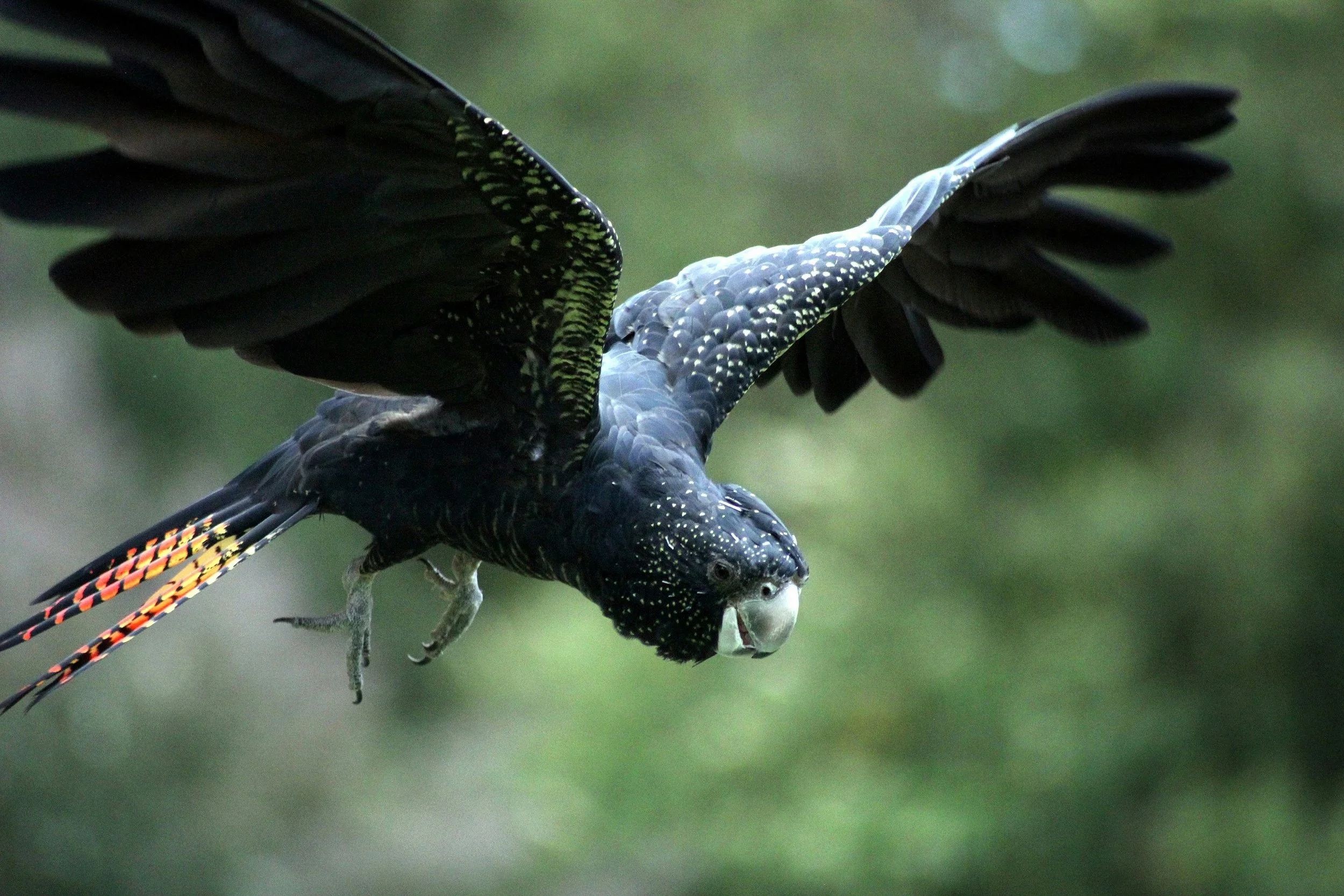
One of the Wheatbelt NRM team members recently found a forest red-tailed black cockatoo killed on a road near Mukinbudin; this is a reminder of the risks wildlife face every day.
Wildlife-friendly driving can make a real difference, especially in regional and rural areas where native animals regularly move across roads in search of food, water and habitat.
The three species of Black cockatoos that call our region home (Carnaby’s, Baudins, and forest red-tailed Black cockatoos) are iconic to south-western Western Australia, yet all species have declined significantly over time, with populations falling by more than 50% over the past 50 years. They are also listed as threatened with extinction under both state and commonwealth legislation. Habitat fragmentation is a major issue for these species. As landscapes become increasingly cleared and broken up, black cockatoos are forced to travel greater distances between feeding, nesting and roosting resources increasing exposure to injury or mortality while moving through the landscape.
Road trauma is one of those major risks. Collisions between black cockatoos and motor vehicles have been identified as the most common cause of wildlife hospital admissions. In rural areas, the danger can be even greater, with black cockatoos sometimes feeding on spilled grain along transport routes. Due to their clumsiness on the ground and slow mobility when taking off, black cockatoos are especially vulnerable to passing vehicles.
This issue arises in part from a broader pattern of habitat decline, with cockatoos taking advantage of foraging opportunities along roads. Habitat loss associated with agriculture, timber harvesting, wood chipping and mining has been identified as a principal cause of historical decline of black Cockatoos. The Wheatbelt woodlands estimated to have declined by around 85 per cent, from approximately 6.2 million hectares prior to European settlement to about 939,000 hectares today.
Wildlife friendly driving is one practical way the community can help. Here are a few helpful tips to keep you and our native wildlife safe on our roads:
Slow down when animals are present - reducing your speed allows more time to react.
Stay alert, especially in the early morning and evening/night - wildlife is highly active at these times
Scan the roadside and surrounding areas for animals - take extra precaution in known habitat areas (e.g. dense woodland, sources of water)
If you see one, there are likely more – animals often exist in groups so assume there will be more nearby
Wildlife Welfare - If you hit an animal, stop if it is safe to do so. Check for young (e.g. pouches in kangaroos and echidnas) and contact a wildlife rescue service for assistance.
Protecting our native wildlife is a shared responsibility, and as drivers, we have an important role to play. By having greater awareness on the road, especially in high-risk areas, our community can help reduce unfortunate accidents that occur on our roads. In addition, driving safely with wildlife in mind will also pay off for us. Fewer accidents will result in fewer insurance claims (and lower premiums), and reduced vehicle repair costs and write-offs. So, wildlife-friendly driving is a win-win for everyone.
Want to get involved?
If you are a landholder with areas of remnant vegetation and are interested in supporting Black Cockatoo conservation benefiting Wheatbelt Eucalypt Woodland Threatened Ecological Communities (TEC), there are many ways you can help. Protecting remnant vegetation, participating in feral control and restoring habitat can all contribute to healthier ecosystems and better outcomes for native wildlife. Wheatbelt NRM can offer significant logistical support and funding for landholders who wish to undertake:
Stock exclusion fencing
Revegetation
Weed control
Feral control
Habitat augmentation
Wheatbelt NRM works with landholders and the community to deliver practical on-ground action across the region. If you’d like to get involved read through our guidelines for our Protecting WA Black-Cockatoos — Wheatbelt NRM project, complete our expression of interest form or contact Project Delivery Officer Cenyce Vincent for more information.
If you are eligible for our projects and want to make a difference, we would love to hear from you!
This project is funded by the Australian Government’s Natural Heritage Trust and delivered by Wheatbelt NRM, a member of the Regional Delivery Partners panel.
Published eNews #414, May 2026