
Parasitic Wasps - Nature’s Pest Controllers
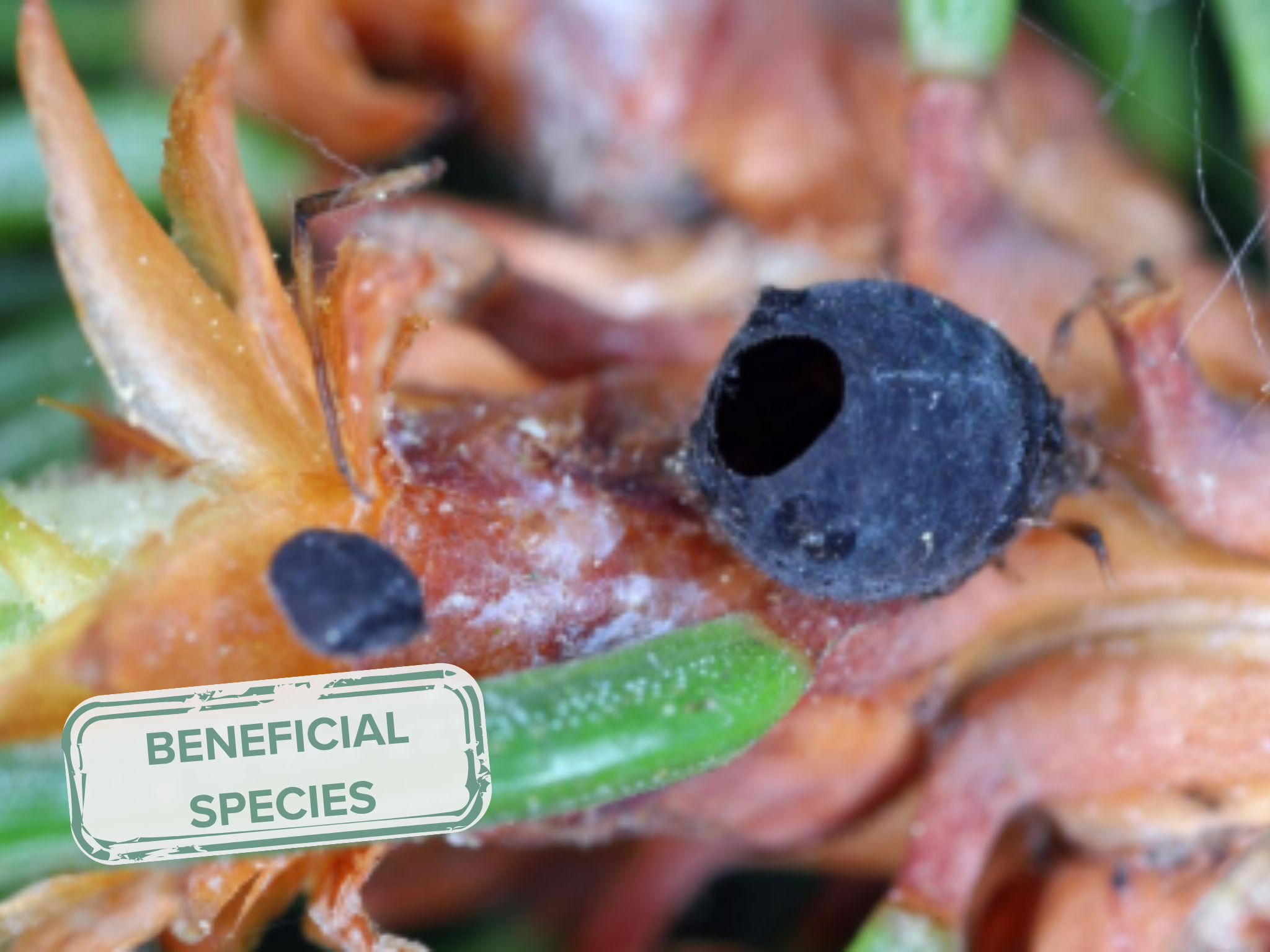
Government of South Australia. (n.d.). Parasitised aphids (“mummies”) [Photograph]. https://pir.sa.gov.au/
A natural ally worth noticing
With the first opening rains across the Wheatbelt, paddocks begin to green up and so too do the insects. Early-season “winter pests” such as mites, aphids, and small sap-sucking insects can rapidly establish on emerging seedlings. While these pests are often front of mind, there’s another group quietly at work in the background: parasitic wasps.
Despite their name, parasitic wasps are not aggressive and pose no threat to people or livestock. In fact, they are one of the most important beneficial insect groups in broadacre agriculture, acting as natural biological control agents that help suppress pest populations before they reach damaging levels.
What are parasitic wasps?
Parasitic wasps are typically very small, often only a few millimetres long, and are rarely noticed unless you are actively looking for them. Unlike predatory insects that consume multiple prey, parasitic wasps lay their eggs inside or on a host insect (commonly aphids, caterpillars, or mites).
Once the egg hatches, the developing larva feeds on the host from the inside, eventually killing it. While this may sound confronting, it is an extremely efficient and targeted form of pest control that has evolved over millions of years.
Different species of parasitic wasps specialise in different hosts. In the Wheatbelt context, many are particularly valuable for managing:
Aphids (including green peach aphid)
Caterpillars (e.g. native budworm)
Mites and small soft-bodied insects associated with early crop growth
Why they matter in early winter
The period following the first rains is critical. Crops and pastures are vulnerable at establishment, and pest pressure can escalate quickly under favourable conditions.
Parasitic wasps often track pest populations closely, increasing in number as hosts become available. This means they can provide a natural “first line of defence”, reducing the need for chemical intervention if populations are allowed to build.
However, their effectiveness depends on survival through early-season conditions and farming practices. Broad-spectrum insecticide use during this period can significantly reduce beneficial insect populations, sometimes leading to secondary pest outbreaks later in the season.
ID in the Paddock: Parasitic Wasps
Size: Very small (1–5 mm), often overlooked
Colour: Usually black, brown, or metallic; some with clear wings
Movement: Quick, darting flight; often seen hovering near plants
What to look for (key signs):
“Mummified” aphids – swollen, bronze or tan-coloured aphid bodies
Round exit holes in aphid shells (where adult wasps have emerged)
Activity around pest colonies rather than random distribution
Where to find them:
Around seedling crops and pastures after first rains
Near aphid colonies or caterpillar activity
In paddocks with retained stubble or nearby remnant vegetation
Supporting beneficial insects on-farm
Encouraging parasitic wasps and other beneficials is a key part of integrated pest management (IPM). Practical steps include:
Monitoring before spraying – check pest thresholds and look for beneficial activity
Reducing broad-spectrum insecticide use, particularly early in the season
Maintaining habitat diversity (e.g. shelterbelts, native vegetation, stubble retention)
Using selective chemicals where intervention is required
By allowing beneficial insects to establish, growers can often achieve more stable pest control outcomes over the season.
Parasitic wasps may not be as visible as larger insects, but their impact is significant. As winter pests emerge with the first rains, these tiny insects are already at work, helping to keep populations in check and contributing to more resilient farming systems across the Wheatbelt.
Taking the time to recognise and protect them can pay dividends throughout the growing season.
References
Australian Government Grains Research and Development Corporation (GRDC). (2023). Beneficial insects in grain crops. https://grdc.com.au
Horne, P. A., & Page, J. (2016). Integrated pest management for crops and pastures. CSIRO Publishing.
Landis, D. A., Wratten, S. D., & Gurr, G. M. (2000). Habitat management to conserve natural enemies of arthropod pests. Annual Review of Entomology, 45, 175–201.
Parolin, P., Bresch, C., Desneux, N., Brun, R., Bout, A., Boll, R., & Poncet, C. (2012). Secondary plants used in biological control: A review. International Journal of Pest Management, 58(2), 91–100.
Published eNews #414, May 2026