
Armyworm: A winter visitor to Wheatbelt crops
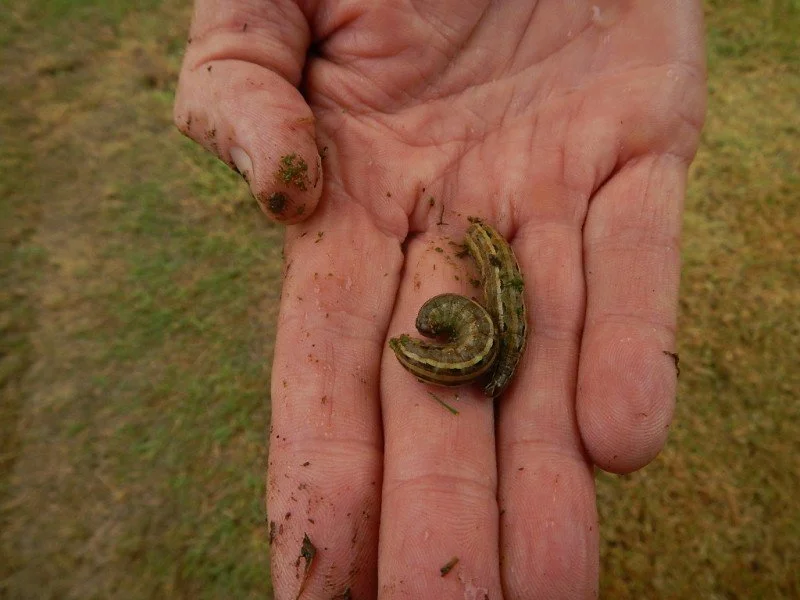
Photo Credit: Nuturf
The armyworm is a common caterpillar pest of cereals and pastures across the Western Australian Wheatbelt.
Armyworms are the larvae of several moth species, with the Common Armyworm (Mythimna convecta) and Inland Armyworm (Persectania dyscrita) among the species commonly encountered in southern Australian grain-growing regions. The name "armyworm" comes from their tendency to move across paddocks in large numbers when food becomes scarce. While outbreaks are not experienced every year, armyworms can cause significant damage when populations build in favourable seasonal conditions.
Lifecycle and winter behaviour
Winter is when armyworms are most likely to be noticed in the Wheatbelt. Adult moths are attracted to green vegetation and lay eggs on grasses and cereal crops. After hatching, caterpillars feed predominantly at night and shelter at the base of plants or beneath surface residue during the day. Cool, moist conditions favour survival and winter rainfall can support the grassy hosts that armyworms depend on. During most of the year, natural predators and disease help keep populations below damaging levels. However, prolonged periods of mild weather combined with abundant feed can allow numbers to increase rapidly. Unlike some pests that migrate into the Wheatbelt later in the season, armyworms often develop locally within cereal and pasture systems, meaning infestations can appear with little warning. Early crop establishment and dense cereal canopies can provide ideal habitat for larvae.
Impact on Wheatbelt crops
Armyworms primarily attack cereal crops including wheat, barley and oats, along with pasture grasses. Young larvae feed on leaf tissue and often go unnoticed. As caterpillars grow larger, their appetite increases dramatically and they begin consuming entire leaves. Severe infestations can strip green leaf area, reducing crop vigour and slowing growth.
The greatest concern occurs later in the season when large larvae climb plants and chew through stems immediately below developing heads. This head-lopping behaviour can result in direct yield losses, particularly in barley and oats. Pasture paddocks can also be affected, with heavy infestations rapidly removing valuable feed and reducing carrying capacity during winter and spring. Fortunately, economic-scale damage is uncommon in most years. Regular crop inspections remain the best defence, particularly following mild, wet winters that favour caterpillar survival.
Monitoring and management
Regular monitoring is critical to combat armyworms. Armyworms are most active during the evening and overnight, so inspections late in the day can be more effective than midday scouting. Look closely at the soil surface, beneath stubble and around the base of plants.
Beneficial insects, spiders, parasitic wasps, birds and naturally occurring diseases all play an important role in suppressing armyworm populations. Preserving these natural enemies through Integrated Pest Management (IPM) can help reduce the need for intervention. Chemical control should only be considered when populations exceed economic thresholds and are likely to cause measurable crop losses. Larger caterpillars consume most of the plant material, so timing is critical if treatment is required.
What to look for in the paddock: Armyworm ID Box
Adult moths
Light brown to grey colouring
Wingspan approximately 35–45 mm
Active at night and attracted to lights
Often difficult to detect during the day
Eggs
Laid in clusters on grasses and cereal leaves
Cream to pale white in colour
Usually hidden amongst foliage
Larvae (caterpillars)
Green, brown or grey in colour
Distinct pale stripes running lengthwise along the body
Smooth-bodied appearance
Curl into a "C" shape when disturbed
Grow to approximately 40–50 mm long
Signs of damage
Ragged chewing on cereal leaves
Bare patches in pasture
Chewed stems below grain heads
Caterpillars sheltering beneath stubble during daylight hours
Good news for growers
Most infestations are controlled naturally
Beneficial insects and predators provide valuable suppression
Early monitoring allows timely management decisions
Helpful Links
References
Department of Primary Industries and Regional Development. (n.d.). Insect pests of broadacre crops in Western Australia. Government of Western Australia.
Hunt, T., & Weeks, R. (2018). Armyworm management in Australian grain production systems. Grains Research and Development Corporation.
McCaffery, A. R. (1998). Resistance to insecticides in heliothine Lepidoptera: A global view. Philosophical Transactions of the Royal Society B: Biological Sciences, 353(1376), 1735–1750.
Queensland Department of Primary Industries. (2021). Armyworm identification and management guide.
Williams, D. G. (2019). Insect pests of field crops in Australia: Identification and management. CSIRO Publishing.
Photo Credit: Nuturf.com.au
Published eNews #416, July 2026